Best Ryobi Pressure Washers in 2026 (PSI, GPM, and What Actually Cleans)
Stop guessing about PSI and GPM — here's what actually matters and what won't wreck your stuff
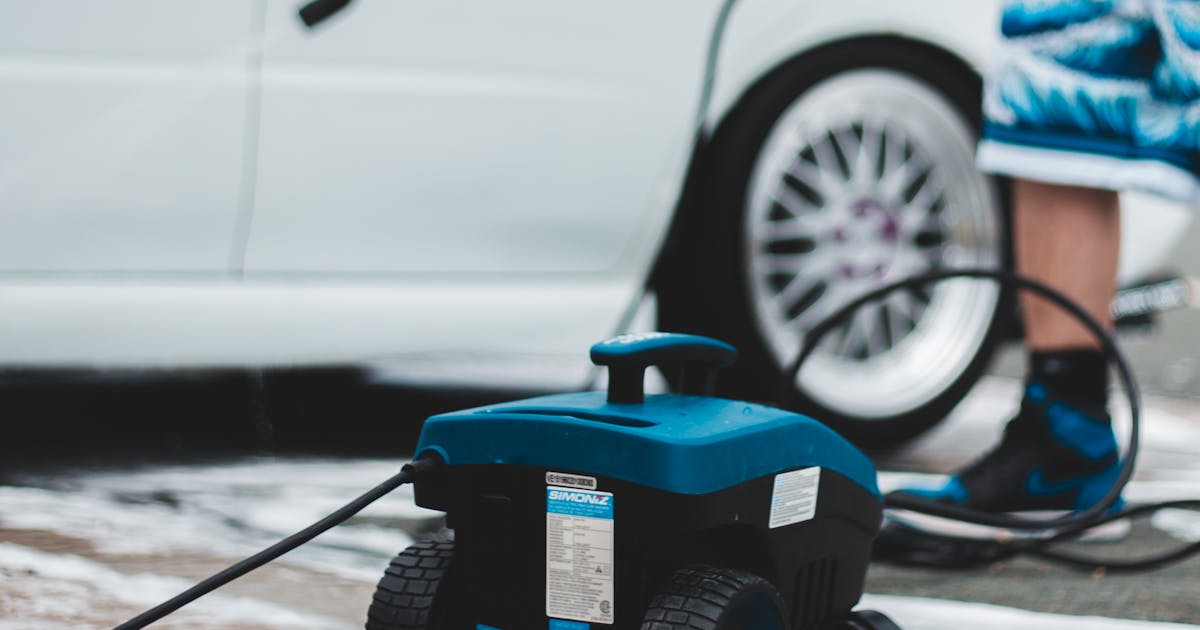
A pressure washer is one of those tools that sounds simple and then you start shopping and suddenly there are 15 models, three power sources, and everyone online is arguing about PSI vs. GPM. Here's the thing: for a homeowner, 90% of pressure washers are overkill or underkill. Let's narrow it down.
PSI vs. GPM: The Only Thing You Need to Understand
PSI (pounds per square inch) is how hard the water hits. Higher PSI strips grime, mold, and stains. It's the "scrubbing" force.
GPM (gallons per minute) is how much water flows. Higher GPM rinses faster and clears away the loosened grime. It's the "flushing" volume.
You need both. High PSI without GPM gives you a toothpick-thin stream that technically has power but takes forever because there's no water volume behind it. High GPM without PSI is a garden hose — lots of water, no cleaning action. The actual number that matters is Cleaning Units: PSI × GPM. A 2,500 PSI washer with 1.2 GPM = 3,000 CU. A 1,800 PSI washer with 2.0 GPM = 3,600 CU. The second machine actually cleans faster despite lower pressure.
This is Ryobi's one weakness in the electric lineup: their electric models top out around 1.1-1.2 GPM. The pressure is there, but the water volume is modest. For homeowner jobs it's fine. For big commercial jobs, it's slow. That's why their gas model exists — 2,900 PSI with 2.5 GPM blows the electrics away on speed.
The Electric Lineup (What Most People Should Buy)
1,800 PSI Electric — RY141803 (~$100)
The entry point. At about $100, this is the cheapest real pressure washer you can buy. It does light work fine — rinsing off a deck, washing patio furniture, cleaning a car, spraying down outdoor cushions. For anything more demanding, you'll be standing there a while wondering why the stain isn't coming off.
Best for: People who pressure wash twice a year for light jobs. If that's you, don't overspend.
2,100 PSI Electric — RY142012 ($199)
The sweet spot for light-to-medium work. At 2,100 PSI and 1.2 GPM, it handles light driveway cleaning, fence washing, deck maintenance, and siding. It won't strip heavy oil stains from concrete, but it handles the normal grime that accumulates over a season.
This is the model for the homeowner who washes the house once in spring, cleans the driveway, and puts it away until next year. At $199, the price is right for that use case.
2,500 PSI Brushless — RY142500 ($329) — Best Overall Pick
This is the Ryobi pressure washer most homeowners should buy. At 2,500 PSI with 1.2 GPM, it has enough muscle for serious driveway cleaning, concrete prep, heavy mold and algae removal, and stripping old stain from decks. The brushless motor is more efficient, runs cooler, and lasts longer than the standard motors in the cheaper models.
The $329 price is a significant step up from the $199 model, but you're getting a materially more capable machine. If you're going to own one pressure washer for the next 5+ years, this is the one that won't leave you wishing you'd bought more power.
3,000 PSI Electric — RY143011 (~$399)
Ryobi's most powerful electric model. At 3,000 PSI, it crosses into territory that can do light concrete etching, heavy stain removal, and paint prep. But here's the thing: at 1.1 GPM, the flow rate actually drops compared to the 2,500 PSI model. You've got more pressure but less water, which means it's slower on large surfaces.
This model makes sense if you specifically need high pressure for targeted jobs — removing deeply embedded oil stains, prepping surfaces for painting, or cleaning heavily neglected concrete. For general homeowner use, the 2,500 PSI brushless is more versatile.
The Automotive Model — RY14AM12 ($150)
This is the new model everyone's talking about, and it's genuinely clever. Instead of high PSI (which damages paint, clear coat, and trim), it runs at 1,200 PSI with 1.8 GPM — that's significantly more water flow than any other Ryobi electric. It's specifically engineered for washing vehicles.
The result: plenty of water to rinse soap and grime, enough pressure to clean without risking your paint job, and accessories designed for automotive use (foam cannon attachment, non-marring hose, stubby trigger handle for one-handed operation). If you detail your cars regularly, this is a purpose-built tool worth owning alongside a higher-PSI unit for the house and driveway.
Cordless/Battery Options
Ryobi offers pressure washers in both their 40V and 18V ONE+ battery platforms. The appeal is obvious: no cord, no outlet, wash anywhere. The reality is more nuanced.
The 40V 2,000 PSI Whisper Series is the best of the bunch — 2,000 PSI and about 45 minutes of runtime on two 6.0Ah batteries. It's genuinely useful if your driveway is far from an outlet, if you want to wash at a remote property, or if you value the portability. It's also significantly quieter than corded electrics.
The 18V ONE+ EZClean at 320 PSI is more of a power rinser than a pressure washer. It's fine for hosing off a muddy kayak or rinsing patio furniture, but don't expect it to clean concrete. Think of it as a better garden hose nozzle, not a pressure washer.
The honest take on cordless: You're paying more for less power and limited runtime. If you have an outdoor outlet near where you'll be working, the corded electrics are better machines for less money. Go cordless only if portability is genuinely important for your situation.
Gas: The Ryobi 2,900 PSI (RY802925)
2,900 PSI with 2.5 GPM from a 212cc engine. This is in a completely different league from the electrics — not because of higher PSI, but because of that 2.5 GPM flow rate. It moves more than twice the water of any Ryobi electric, which means it cleans faster on large surfaces.
The trade-offs are real though: it's loud, requires gas and oil, needs seasonal maintenance, and weighs about 60 pounds. For a homeowner washing their house twice a year, gas is overkill. For someone who maintains rental properties, cleans equipment regularly, or has thousands of square feet of concrete — the gas model earns its keep by cutting your cleaning time in half.
The Comparison Table
| Model | PSI | GPM | CU | Power | Price | Best For |
|---|---|---|---|---|---|---|
| RY141803 | 1,800 | 1.2 | 2,160 | Corded | ~$100 | Light jobs, cars |
| RY142012 | 2,100 | 1.2 | 2,520 | Corded | $199 | General homeowner |
| RY142500 | 2,500 | 1.2 | 3,000 | Corded | $329 | Best all-around pick |
| RY143011 | 3,000 | 1.1 | 3,300 | Corded | ~$399 | Heavy stains, prep work |
| RY14AM12 | 1,200 | 1.8 | 2,160 | Corded | ~$150 | Vehicle washing |
| 40V Whisper | 2,000 | 1.2 | 2,400 | Battery | $400+ | Portability matters |
| RY802925 | 2,900 | 2.5 | 7,250 | Gas | $350+ | Large/commercial jobs |
What to Clean (And What PSI You Need)
This is where people mess up. Too much pressure destroys stuff. Too little wastes your time.
Cars and trucks (1,200–1,800 PSI): Use a 25° or 40° nozzle. Keep the tip at least 12 inches from the surface. The automotive model at 1,200 PSI / 1.8 GPM is ideal. Higher PSI risks chipping paint, especially on older vehicles.
Wood decks and fences (1,500–2,000 PSI): Use a 25° or 40° nozzle. Keep moving — holding in one spot strips wood fibers and creates fuzzy, damaged patches. Lower pressure with a wider spray pattern is safer than cranking it up.
Vinyl siding (1,500–2,000 PSI): Work top to bottom. Above 2,000 PSI, you risk forcing water behind the siding, which causes mold inside your walls. That's worse than whatever you were cleaning off the outside.
Concrete driveways (2,000–3,000 PSI): This is where you want power. Concrete can handle it. Use a 15° nozzle for stubborn stains and a surface cleaner attachment for uniform cleaning without zebra stripes.
Concrete prep for painting/sealing (2,500–3,000+ PSI): The 2,500 or 3,000 PSI models with a 15° nozzle. You want to open the pores of the concrete for adhesion.
The One Accessory That Changes Everything: Surface Cleaners
If you're cleaning any flat surface — driveway, patio, sidewalk, garage floor — a surface cleaner attachment is the single best upgrade you can buy. It's a spinning disc with nozzles underneath that gives you even, streak-free cleaning at 3-5x the speed of a standard wand.
Without a surface cleaner, you'll spend an hour doing stripes across your driveway and still have zebra marks. With one, the same job takes 15-20 minutes and looks professional. Ryobi makes one for about $40-$60 that fits their electric models. It's the best $50 you'll spend on this tool.
Other worth-it accessories: a foam cannon for car washing ($20-$30), a 25-foot hose extension if you have a big property, and replacement nozzles (they wear out and lose focus over time).
Ryobi vs. the Competition
Sun Joe: Similar price range, decent quality, slightly less durable. Good if Ryobi is out of stock. Not worth switching to if you already own Ryobi tools.
Greenworks: Quieter operation, slightly better build quality on some models, similar pricing. Worth considering if noise is a concern.
Simpson: Gas-only, commercial-grade, built like tanks. Way more than a homeowner needs, but if you're doing this professionally, Simpson is the standard.
Ryobi's advantage: Available at Home Depot everywhere, good accessories ecosystem, reasonable pricing, and if you're already in the Ryobi 40V battery system, the cordless models share batteries with your mower and blower.
Durability: The Honest Truth
Ryobi pressure washers are good value but not built to last forever. User reports consistently show that after 2-3 years of regular use, some models develop pressure loss, hose connector issues, or pump problems. The sealed pump design on most Ryobi electrics means you can't repair them — when the pump goes, the unit is done.
For a homeowner using it 10-15 times per year, a Ryobi will typically last 3-5 years. At $199-$329, that's reasonable cost per year. Just don't expect a decade of service like you might get from a Simpson gas unit.
Bottom Line: Which Ryobi Pressure Washer Should You Buy?
Best all-around: The 2,500 PSI brushless electric (RY142500) at $329. Enough power for every homeowner job, efficient motor, fair price.
Budget pick: The 2,100 PSI electric (RY142012) at $199. Handles most jobs adequately and won't break the bank.
Car washing: The 1,200 PSI automotive model (RY14AM12) at $150. Purpose-built, high flow, safe for paint.
Portability matters: The 40V Whisper Series at $400+. No cord, low noise, real cleaning power.
Big jobs: The 2,900 PSI gas (RY802925). Double the water flow of any electric. For multiple properties or heavy-duty work.
Whatever you buy: Get a surface cleaner attachment. It transforms a 2-hour driveway job into a 30-minute one. Seriously. It's the best $50 accessory in the pressure washer world.
What PSI Do You Actually Need? (The Honest Answer)
Ryobi sells pressure washers from 1,200 to 3,400 PSI. Most people overbuy. Here's the reality:
| Cleaning Job | PSI Needed | Best Ryobi Model | Notes |
|---|---|---|---|
| Car washing | 1,200-1,500 | 1,200 PSI Automotive | Higher PSI risks paint damage and seal damage on older vehicles |
| Patio furniture, grills | 1,500-1,800 | 1,800 PSI brushless | Low PSI, wide nozzle. Gentle enough for painted metal. |
| Deck cleaning (wood) | 1,500-2,000 | 1,800 or 2,300 PSI electric | Higher than 2,000 PSI furrows soft wood. Use white nozzle. |
| Siding (vinyl or aluminum) | 1,500-2,000 | 2,300 PSI brushless | Always spray downward. Upward spray gets behind siding. |
| Concrete driveway (light dirt) | 2,500-3,000 | 2,500 PSI brushless | Better with a surface cleaner attachment |
| Concrete driveway (oil, tire marks, years of grime) | 3,000-3,400 | 3,400 PSI gas | Pre-treat with degreaser. Two passes with surface cleaner. |
| Paint stripping / heavy prep | 3,000+ | 3,400 PSI gas | Yellow 15° nozzle. Slow, deliberate passes. |
Pressure Washing vs. Hiring a Pro: The Math
Before you spend $200-$400 on a Ryobi, here's when buying makes sense and when hiring is smarter:
| Scenario | DIY Cost (Ryobi + Time) | Pro Cost | Winner |
|---|---|---|---|
| Single driveway clean, once | $250 (machine) + 2 hrs | $150-$250 | Hire a pro — they're faster and have better equipment |
| Driveway + house wash, annually | $300 (machine + soap) + 4 hrs × 3 yrs = $300 + 12 hrs | $300-$500/yr × 3 yrs = $900-$1,500 | DIY wins by year 2 |
| Regular cleaning (monthly patio, cars, etc.) | $250 once + $20/yr soap | $100-$200 per visit × 6/yr = $600-$1,200/yr | DIY wins immediately |
The breakeven point for most homeowners is 2-3 uses. If you'll pressure wash your driveway, house, and deck once a year, the Ryobi pays for itself the second year. If you'll use it monthly (cars, patio, walkways), it pays for itself in the first month.
Accessories Worth Buying (and One to Skip)
Buy: Surface cleaner ($40-$80). The single best accessory. Turns a 4-hour driveway job into 45 minutes. Eliminates tiger stripes. If you're buying a Ryobi for concrete, buy this with it.
Buy: Upgraded hose ($40-$60). The stock Ryobi hose is 25 feet and kinks. A 50-foot non-marring hose changes the whole experience. Second-best upgrade after the surface cleaner.
Buy: Foam cannon ($25-$40). For car washing. Covers the vehicle in thick soap foam, loosens dirt before you touch it, reduces swirl marks. Fun to use, practically useful.
Skip: Turbo nozzle ($20-$40). It concentrates the spray into a spinning pinpoint that's supposedly faster. In practice, it's hard to control, leaves spiral marks on flat surfaces, and doesn't beat a surface cleaner on driveways. Save the $30.
New to pressure washing? Our beginner's guide to pressure washing covers nozzle selection, soap choices, and the mistakes that destroy siding. Worth reading before you pull the trigger for the first time.