Best Tillers for Your Garden: Front vs. Rear Tine, Gas vs. Electric, Real Truth
Why the wrong tiller is worse than no tiller at all
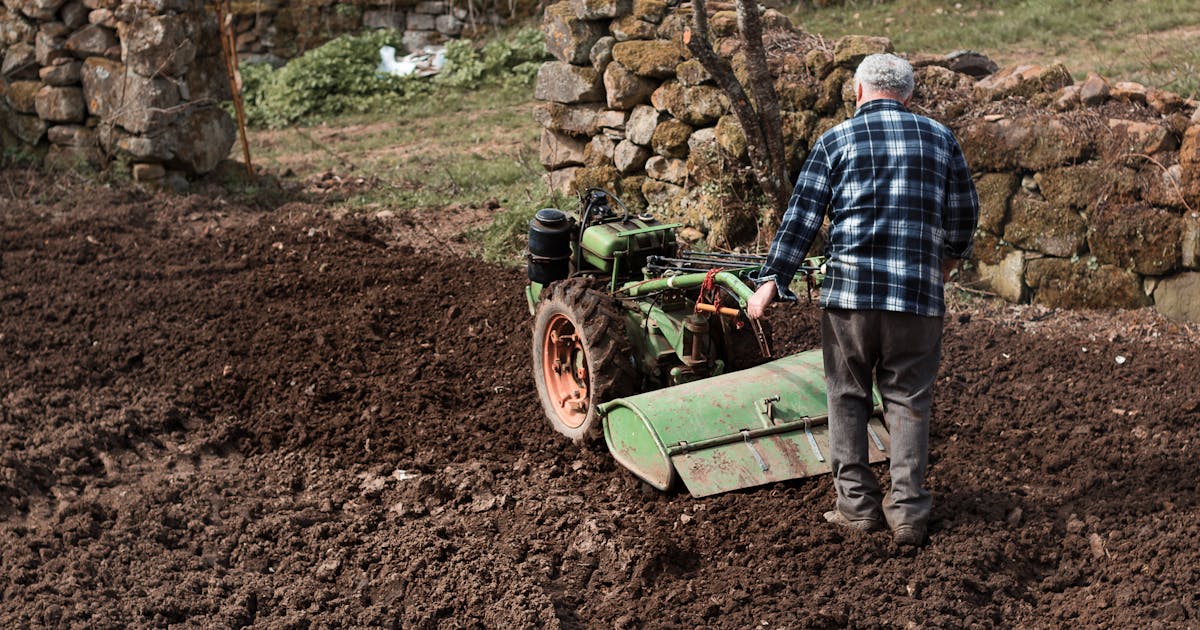
Tillers are one of those tools where people either buy way too much machine or not nearly enough. The homeowner who wants to plant a 4x8 garden bed buys a 200-pound rear-tine beast. The homeowner who needs to break virgin sod buys a $100 electric cultivator that bounces off the ground like a pogo stick. Let's match the tiller to the job.
The Four Types of Tillers (And When Each Makes Sense)
Mini Cultivators — For Existing Beds ($100–$300)
Small, light (under 25 pounds), and designed for one job: loosening and mixing soil in beds that have already been broken. If you have established garden beds that need seasonal turning, weed control between rows, or soil amendment mixing, a mini cultivator is the right tool. It's not meant to break new ground — don't try.
The Mantis 7940 is the gold standard here. It's been around for decades because it genuinely works. The tines rotate at high speed and dig 10 inches deep in loose soil. At about 20 pounds, anyone can use it without fatigue. The Mantis runs on gas (2-cycle) and starts easily. At $280-$330, it's a premium price for a cultivator, but it lasts 15+ years with basic maintenance.
Budget alternatives: Earthwise TC70025 (electric, $100-$130) or Sun Joe TJ603E (electric, $100-$150). Both handle light cultivation in existing beds. They won't match the Mantis in depth or durability, but for seasonal bed prep in soft soil, they get the job done.
Front-Tine Tillers — The Compromise ($250–$500)
Front-tine tillers have the tines in front of the wheels. The tines pull the machine forward as they dig, which means you're constantly fighting the machine to control speed and direction. In soft soil, they're manageable. In hard or rocky soil, they bounce, skitter, and generally make you question your life choices.
The honest truth: front-tine tillers are the worst option for most homeowners. They're too heavy and bulky for simple bed maintenance (where a cultivator excels) and too weak and uncontrollable for breaking new ground (where rear-tine dominates). They exist in a middle ground that isn't useful for most jobs. If you're considering a front-tine tiller, you probably want either a cultivator or a rear-tine instead.
Rear-Tine Tillers — For Breaking New Ground ($400–$1,500)
This is what you need for serious tilling: breaking virgin sod, converting a lawn section into garden, tilling clay-heavy soil, or working a large plot (500+ square feet). The tines are behind the wheels, the wheels drive the machine forward at a controlled pace, and the tines dig independently. You walk behind and steer — the machine does the work.
Counter-rotating tines (CRT) are the key feature for breaking new ground. Standard rotating tines spin in the direction of travel, which works fine in soft soil but skips across hard ground. Counter-rotating tines spin backward, digging aggressively into compacted soil, clay, and sod. If you're breaking new ground, you want CRT.
Best homeowner rear-tine models:
- Earthquake 29702 — 212cc Viper engine, counter-rotating tines, 16" tilling width, $500-$700. Excellent value for the power.
- Troy-Bilt Super Bronco — 208cc, CRT, 16" width, $600-$800. Proven reliability, widely available at Lowe's.
- Husqvarna CRT900 — 208cc, CRT, 17" width, $700-$900. Premium build, the nicest-handling rear-tine in the homeowner range.
Battery/Electric Tillers — Convenience with Limits
Battery-powered tillers from Ryobi (40V), EGO, Milwaukee, and Greenworks are getting better every year. They're quiet, start instantly, require zero fuel maintenance, and share batteries with other tools in the ecosystem.
The limitation is real though: battery tillers have the power of a mid-range cultivator, not a rear-tine tiller. They're great for maintaining existing beds but won't break compacted soil or virgin sod effectively. If you already own a Ryobi or EGO battery system and want a tiller attachment for bed maintenance, the battery option is convenient and adequate. For anything more, you need gas power.
Gas vs. Electric: The Decision Matrix
| Job | Best Power Source | Why |
|---|---|---|
| Maintaining raised beds | Electric cultivator | Light, quiet, no mixing fuel |
| Seasonal bed prep (soft soil) | Electric or Mantis | Sufficient power, convenient |
| Large garden (500+ sq ft) | Rear-tine gas | Speed and coverage |
| Breaking new ground | Rear-tine gas (CRT) | Only option with enough power |
| Rocky/clay soil | Rear-tine gas (CRT) | Counter-rotating tines required |
Tilling Depth and Width: What the Numbers Mean
Depth: Most tillers adjust from 2-8 inches. For general garden prep, 6-8 inches is standard. For shallow cultivation between rows, 2-4 inches keeps you from disturbing roots. For new ground, go full depth on the first pass.
Width: Ranges from 6 inches (cultivators) to 24+ inches (large rear-tine). Wider = fewer passes = faster work on large plots. But wider tillers are also heavier and harder to maneuver in tight beds. For raised beds and small gardens, 10-12 inch width is ideal. For large plots, 16-18 inches is the sweet spot.
Rent vs. Buy: The Practical Math
If you're breaking ground for a one-time garden project, rent a rear-tine tiller for $75-$150/day. You'll get a commercial-grade machine that makes the job easy, use it for 3-4 hours, and return it without storing a 200-pound machine in your garage for the next 10 years.
If you maintain a garden annually and need seasonal bed prep, buy a cultivator (Mantis or electric). You'll use it 4-8 times per year, it stores easily, and the per-use cost drops to pennies over time.
If you have a large garden (1,000+ square feet) that you till every spring, buying a rear-tine tiller makes sense. You'll use it enough to justify the cost and storage.
Tilling Tips That Save Time and Soil
Don't over-till. Working the soil to dust destroys structure and kills beneficial organisms. Two passes at full depth is usually enough. The soil should be broken into fist-sized chunks, not powder.
Till when soil is dry-ish. Wet soil clumps, compacts, and sticks to everything. If you can squeeze a handful and it holds its shape, it's too wet. Wait a day or two.
Add amendments before tilling, not after. Spread compost, manure, lime, or fertilizer on the surface, then till it in. This distributes amendments evenly through the root zone instead of leaving them on top.
Consider no-till for established beds. Increasingly, gardeners are skipping annual tilling in favor of top-dressing with compost and mulching. It preserves soil biology, reduces erosion, and honestly saves you the work. If your beds are already established and productive, you might not need a tiller at all — just a good layer of compost.
Bottom Line
Maintaining existing beds: Mantis 7940 cultivator ($280-$330) or a budget electric ($100-$150).
Breaking new ground: Rear-tine gas tiller with counter-rotating tines — Earthquake or Troy-Bilt ($500-$800). Or rent one for $75-$150/day.
One-time garden project: Rent. Don't buy a 200-pound machine for a job you'll do once.
Skip entirely: Front-tine tillers. They're frustrating to use and don't excel at anything. Get a cultivator or a rear-tine — pick a lane.
If you're doing garden bed prep, a tiller handles the soil. For fence posts or tree planting, check our post hole digger guide — different tool, different job, but they go hand-in-hand for yard projects.