Pressure Washing for Beginners: Nozzles, Soap, PSI, and the Mistakes Everyone Makes
The beginner's guide that saves your siding, your deck, and your dignity
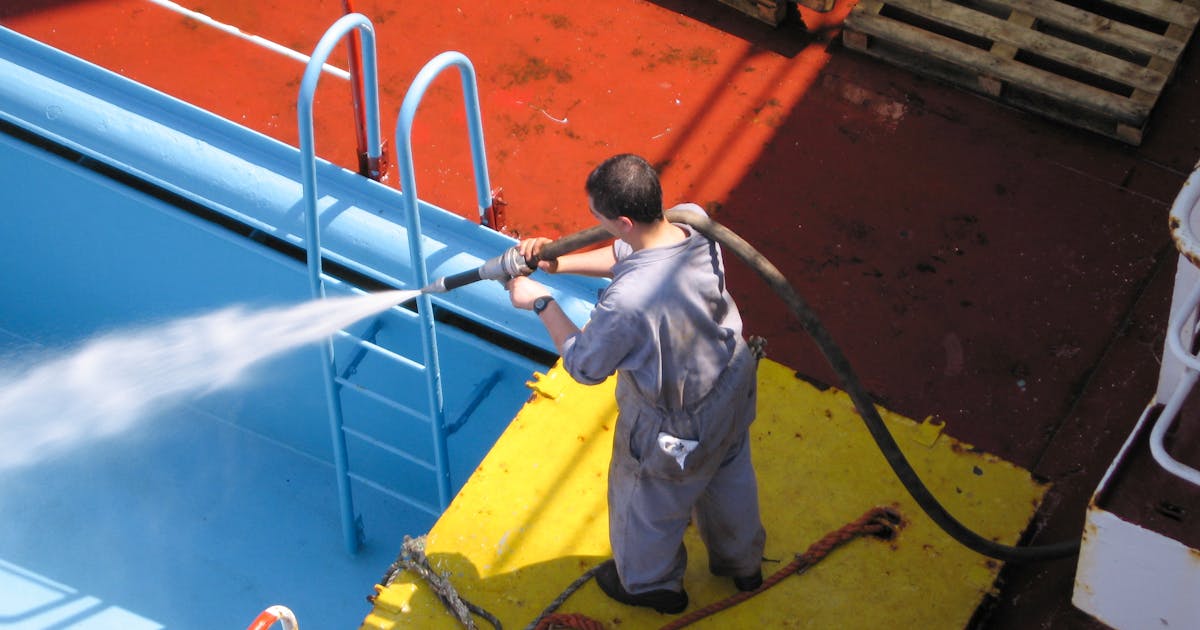
The Nozzle Color Chart (Memorize This)
Every pressure washer comes with 4-5 colored nozzle tips. Most people just grab one randomly. Don't do that — the wrong nozzle on the wrong surface costs hundreds in damage. Here's the breakdown:
Red (0°): Pencil-thin laser beam of water. Insane concentrated pressure. Used for rust removal, stuck paint on metal, and that's about it. Will destroy wood, siding, soft stone, and your marriage if you point it at someone's car. Seriously — leave this one in the box unless you know exactly what you're doing.
Yellow (15°): Narrow fan pattern. Good for heavy concrete staining, stripping paint you actually want to remove, and prepping surfaces for staining. Still aggressive enough to damage softwood and vinyl siding. Use with caution.
Green (25°): The workhorse for most outdoor cleaning. Good for concrete driveways, brick, stone, and general grime removal. Wide enough fan that you won't accidentally etch lines into concrete. This is the nozzle you'll use most.
White (40°): Gentle wide fan. Perfect for siding, fences, deck cleaning, windows (from a distance), and any surface where you don't want to risk damage. When in doubt, start here and step up to green if it's not cutting through the grime.
Black (65°): Low-pressure soap nozzle. This is the ONLY nozzle that activates your detergent siphon. If you're spraying soap and nothing comes out, you're probably on the wrong nozzle. Switch to black, apply soap, let it dwell, then switch to white or green to rinse.
PSI Settings by Surface
If your pressure washer has adjustable PSI (some electric models do), here's where to set it. If it doesn't adjust, control your pressure by nozzle selection and distance from the surface.
Vinyl siding: 1,200-1,500 PSI max. White nozzle. Hold the wand 18+ inches away. Go with the grain of the siding, not against it — water forced up under the lap seams gets inside your walls.
Concrete driveway: 2,500-3,000 PSI. Green nozzle, or better yet, a surface cleaner attachment. Concrete can handle the pressure — your issue here is going too fast, not too hard.
Wood deck: 1,000-1,500 PSI. White nozzle. Keep 12+ inches of distance. Pressure too high or nozzle too close will furrow the wood grain and create splinter traps. If the deck is painted or stained, you'll strip the finish at higher pressure.
Brick and stone: 2,000-2,500 PSI. Green nozzle. Most brick handles pressure well, but old mortar joints can be blasted out by overly aggressive cleaning. If your mortar is already crumbling, go lighter.
Cars and boats: 1,200-1,500 PSI max. White nozzle. 24+ inches of distance. Or honestly, just use a foam cannon — it's faster and you won't accidentally blast a chip in your clear coat.
Pressure Washer Soap: What to Use (and What NOT to Use)
Use pressure washer-specific detergent. They're formulated to work at the right concentration, won't damage pump seals, and are designed to break down outdoor grime. Most come in concentrated form — dilute according to the bottle.
For concrete and driveways: Use a degreaser-type pressure washer soap. These cut through oil stains, tire marks, and ground-in dirt.
For siding and fences: Use a house wash concentrate. These are designed for mildew, algae, and general environmental grime without being harsh on paint or vinyl.
For wood decks: Use a wood-specific cleaner, especially if you plan to re-stain. These brighten the wood without damage.
Always apply soap with the black 65-degree nozzle. Spray bottom to top (so soap doesn't streak down over dry surface), let it dwell for 5-10 minutes, then rinse top to bottom with your cleaning nozzle. That dwell time is where the magic happens — the soap does the hard work so your pressure washer doesn't have to.
Extension Wands: When You Need One
Your standard wand is about 18-20 inches. An extension wand adds 2-4 feet of reach. You need one if you're washing second-story siding, cleaning gutters from the ground, or reaching above a tall deck. Without one, people end up on ladders holding a pressure washer wand, which is exactly as dangerous as it sounds — the kickback from a high-PSI wand on a ladder is a trip to the ER waiting to happen.
Telescoping extension wands adjust from 2-6 feet and let you reach most second-story areas from the ground. Pair it with a 50-foot hose and you can wash an entire two-story house without moving the machine or climbing anything.
The 5 Mistakes That Cost People Money
1. Starting too close to the surface. Begin at 24 inches and move closer as needed. At 6 inches with a green nozzle and 3,000 PSI, you will etch concrete and furrow wood. It happens fast.
2. Pressure washing windows at close range. The pressure can pop seals on double-pane windows. Keep your distance and use the white nozzle. Better yet, just clean windows by hand.
3. Not testing in a hidden spot first. Test your nozzle and distance on the back corner of whatever you're cleaning. If it damages the surface, you'll know before you've ruined the front of the house.
4. Spraying upward under siding. Water gets behind the siding, into the wall cavity, and hello mold. Always spray downward or at a slight horizontal angle on siding.
5. Ignoring the pump maintenance. After each use, run clean water through the pump for 30 seconds. Before winter storage, run pump saver antifreeze through it. A new pump costs $100-300. Pump saver costs $8.