Ryobi Pressure Washer Review 2026: Which Model Wins?
Ryobi sells more pressure washers to homeowners than almost anyone — here's the honest verdict on whether the green machines deserve it
Top Picks (At a Glance)
Quick links to the products we recommend most in this guide. Prices shown on Amazon at click-through.

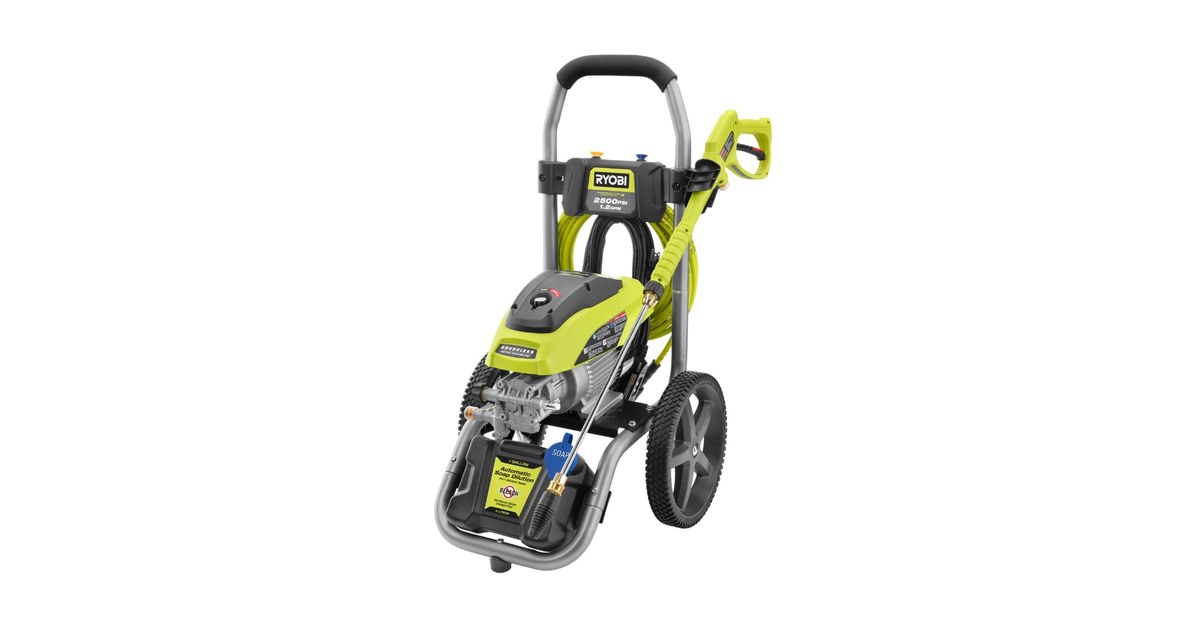
Ryobi 2,500 PSI Brushless Electric (RY142500)
The best electric Ryobi makes — brushless induction motor, 1.2 GPM, and enough punch for driveways, siding, and fences without gas hassle.
Check Price on Amazon →
Ryobi 2,000 PSI Electric (RY141900)
The value workhorse — 2,000 PSI covers patios, cars, and furniture, and it's the Ryobi you'll most often find in stock at a fair price.
Check Price on Amazon →
Ryobi 2,900 PSI Gas Pressure Washer
The step into gas power — 2,900 PSI for big concrete jobs, pre-paint prep, and second-story reach with the right nozzle.
Check Price on Amazon →
Ryobi 1,600 PSI Electric (RY141612)
The patio-and-car special — light, cheap, stores on a shelf. Not a concrete machine, and doesn't pretend to be.
Check Price on Amazon →
Ryobi 12" Surface Cleaner (RY31SC12)
The attachment that makes driveways fast — even passes, no zebra stripes. Fits Ryobi electric models 2,300 PSI and under.
Check Price on Amazon →Walk down the pressure washer aisle at Home Depot and the green wall stares back at you. Ryobi has quietly become the default homeowner pressure washer brand in America — not because they make the most powerful machines, but because they figured out what a homeowner actually needs: honest ratings, tool-free setup, electric options that start every time, and a warranty you can walk into any Home Depot with.
We've already ranked the best Ryobi pressure washer models — this is the brand review: whether Ryobi deserves your money at all, where the lineup genuinely shines, and where your dollars are better spent elsewhere.
The Verdict Up Front
Ryobi pressure washers earn a solid B+. The electrics are the story: brushless motors on the newer models (a real durability upgrade — no carbon brushes to wear out), induction motors that run quieter than the cheap universal-motor competition, and published pressure and flow specifications that are appropriate for typical homeowner jobs. The gas units are respectable mid-tier machines built on proven engines. Nothing in the lineup competes with commercial-grade equipment — and nothing pretends to.
The honest knocks: hose reels on the cheaper models feel like an afterthought, stock nozzles are plastic where competitors ship brass, and the biggest electric tops out around 3,000 PSI — if you need more, you're going gas whether you like it or not.
The Lineup, Model by Model
RY142500 — 2,500 PSI Brushless: The One to Buy
This is Ryobi's best pressure washer, full stop. The brushless induction motor is the same technology argument as cordless tools: less heat, less wear, longer life, quieter running. 2,500 PSI at 1.2 GPM handles the full homeowner list — concrete, siding, fences, decks (carefully), cars (with the right nozzle) — and the onboard storage and roll-cage frame make it livable in a garage. If you buy one machine to do everything residential, this is it.
RY141900 — 2,000 PSI: The Value Workhorse
The most popular electric Ryobi for a reason: it's the sweet spot of price and capability. 2,000 PSI won't strip paint or fly through a big driveway, but it washes cars without damage, cleans patios and furniture, and knocks mildew off vinyl siding. It's also consistently in stock on Amazon at a fair price, which is more than can be said for much of the lineup.
The 2,900 PSI Gas: When Electric Runs Out
Big driveways, pre-paint house washing, and anything measured in hours instead of minutes wants gas. Ryobi's 2,900 PSI unit is a legitimate mid-tier gas machine — axial cam pump, reliable cold starts, no cord management. The trade is the usual gas trade: winterizing, fuel, noise, and a pull cord. Buy it when the job list demands it, not before.
RY141612 — 1,600 PSI: Patio Duty Only
Light, cheap, stores on a shelf, and completely honest about what it is: a patio furniture, grill, and car rinse machine. It will disappoint you on concrete — that's not a flaw, it's a spec. Perfect second machine or apartment-and-townhouse pick.
The Surface Cleaner: The Multiplier
Not a washer — the attachment that makes washers useful. The 12-inch surface cleaner turns driveway cleaning from stripe-by-stripe wand work into even passes at triple the speed. Our surface cleaner roundup covers the category; the Ryobi unit fits their electrics up to 2,300 PSI and is the obvious pairing.
The Lineup at a Glance
| Model | PSI / GPM | Power | Best For |
|---|---|---|---|
| RY142500 brushless | 2,500 / 1.2 | Electric | The everything machine — top pick |
| RY141900 | 2,000 / 1.2 | Electric | Value pick, patio-to-siding duty |
| 2,900 gas | 2,900 / 2.3 | Gas | Big concrete, pre-paint prep |
| RY141612 | 1,600 / 1.2 | Electric | Patio, grill, car — light duty |
| RY31SC12 surface cleaner | — | Attachment | Driveways 3x faster |
Reliability: What Owners Actually Report
Recurring owner-feedback themes are more useful than any single review. Electrics: the motors outlast the accessories — the common failure points are the plastic wand connections and hoses, not the pump or motor. Treat the fittings gently, drain the unit before freezing weather, and the motor and pump have a better chance of delivering a long service life. The brushless models should stretch that further; the technology has less to wear. Gas: standard gas-engine rules apply — the machines are fine, stale ethanol fuel is the killer. Stabilize or drain before winter, same as your gas blower.
The warranty is where Ryobi separates from the no-name electrics at the same price: a published limited-warranty term that is stronger than many no-name alternatives; confirm the current claim process with Ryobi or the retailer. The $99 Amazon specials with impressive PSI stickers come with an email address in Shenzhen. That difference is worth real money the day something leaks.
Ryobi vs the Alternatives
vs Greenworks: the closest fight. Greenworks electrics are comparable machines, sometimes cheaper; Ryobi wins on warranty logistics and the Home Depot ecosystem. Our Greenworks roundup covers their side.
vs Sun Joe: Sun Joe undercuts on price; Ryobi outbuilds on motors and fittings. Pay the difference if you'll use it more than monthly.
vs commercial brands (Simpson, DeWalt gas): different league, different price. If you're washing weekly or working second-story stucco, step up. For 95% of homeowners that's paying for capacity that never gets used.
Common Questions
Is Ryobi a good pressure washer brand?
For homeowners, yes — among the best in the value tier. Honest specs, real warranty support, and a lineup that covers light patio duty through serious gas power. It's not commercial equipment and doesn't price like it.
Are Ryobi pressure washers made by Ryobi?
Ryobi outdoor products are made by TTI (Techtronic Industries), the same parent behind Milwaukee and Hoover, under license. Manufacturing is TTI's global operation — the same supply chain building the tools that dominate every big-box aisle.
Electric or gas Ryobi — which should I get?
Electric unless you have a specific gas-sized job. The 2,500 brushless handles everything a typical property throws at it, starts instantly, needs zero maintenance, and stores anywhere. Gas earns its keep on multi-hour concrete jobs and wherever cords can't reach.
Can I use a Ryobi pressure washer to wash my car?
Yes — use the 40° (white) nozzle, keep some distance, and skip anything under 25°. The 1,600 and 2,000 PSI electrics are ideal car machines; 2,500+ demands more care.
What maintenance do the electrics need?
Almost none: flush the detergent tank, disconnect and drain hoses before frost, store inside. Pump preservative (a few dollars a bottle) before winter storage prevents the one failure that actually kills electric washers — freeze damage.
Bottom Line
Ryobi earned the green wall. The 2,500 PSI brushless is the best homeowner electric they've made and the default recommendation; the 2,000 PSI saves money for lighter duty; the 2,900 gas covers the jobs electric can't. Add the surface cleaner if a driveway is in your life — it's the difference between a chore and a Saturday satisfaction. For the model-by-model rankings, the best Ryobi pressure washers guide breaks down the full lineup, and the hose and beginner technique guides cover the rest of the kit.
Keep It Running
The consumables owners of this gear buy again every season - the boring stuff that decides whether it starts.

Sun Joe House and Deck All-Purpose Cleaner, 1 Gallon
Pressure-washer-rated concentrate for siding and decks - detergent does the work, pressure rinses it.
Check Price on Amazon →
Simple Green Oxy Solve Total Outdoor Cleaner
Peroxide-based concentrate carrying the EPA Safer Choice label - for wood, concrete and vinyl.
Check Price on Amazon →
STA-BIL Pump Protector
The four-ounce bottle that keeps the pump seals from drying out or freezing between uses.
Check Price on Amazon →Ready to buy?
Browse current pricing, current models, and reader reviews on Amazon — your clicks keep these guides free.
Shop Ryobi Pressure Washers on Amazon →