Best Heat Tape for Pipes in 2026: Cheap Insurance Against a Burst Line
A frozen pipe is an inconvenience. A burst one is a five-figure insurance claim and a gutted wall.
Top Picks (At a Glance)
Quick links to the products we recommend most in this guide. Prices shown on Amazon at click-through.

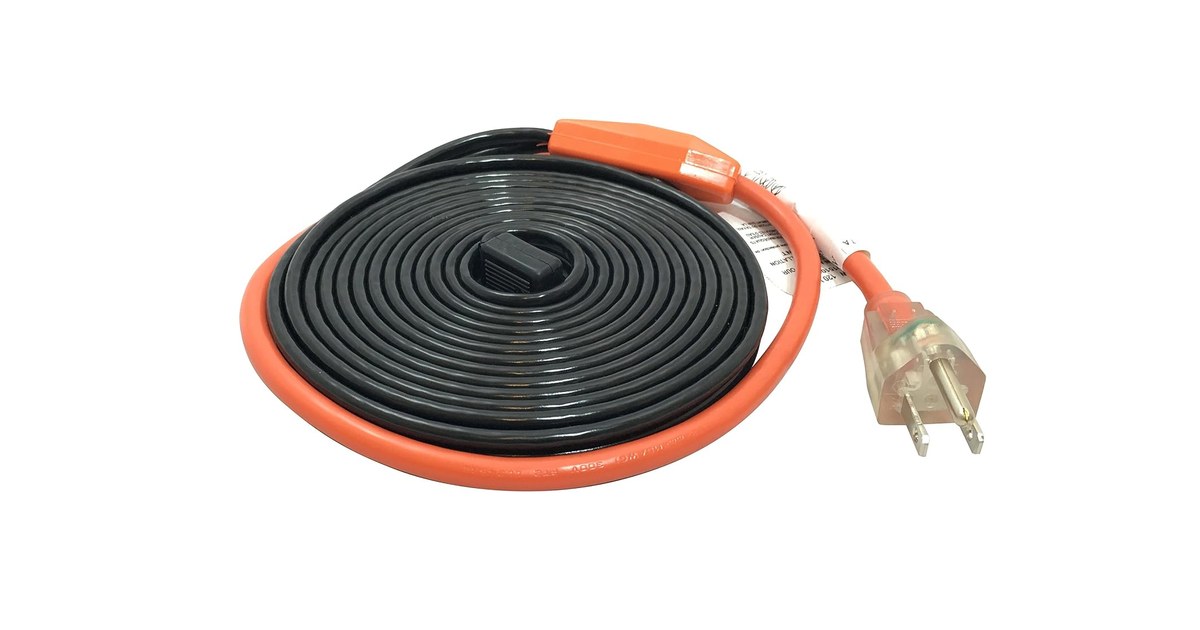
Frost King HC12A Automatic Heating Cable, 12 Feet
120V at 7 watts per foot with a built-in thermostat, rated by Frost King to 38 degrees below zero.
Check Price on Amazon →
Frost King HC6A Automatic Heating Cable, 6 Feet
The short run - same 7 watts per foot and thermostat for one exposed elbow or a well head.
Check Price on Amazon →
EasyHeat 40-Foot Pipe Heating Cable
280 watts across 40 feet at 7 watts per foot - for long crawlspace runs a short kit cannot cover.
Check Price on Amazon →Heat tape is the highest-leverage twenty dollars in the winter aisle. The pipes that freeze are almost never the ones inside heated walls; they are the ones nobody thought about - the run through an unheated crawlspace, the line to the barn hydrant, the exposed elbow at the well pressure tank, the garage utility sink. All of them are fixable in an afternoon with a cord and a roll of tape.
What It Is and How It Works
Pipe heating cable runs along the pipe (not spiraled tightly around it unless the instructions say so), held on with tape, and plugs into a standard outlet. The kits here are automatic: a built-in thermostat senses pipe temperature and powers on only when it approaches freezing, so it is not burning electricity all winter. Frost King specifies 120V at 7 watts per foot and approves its kits for copper, iron, and Schedule 40 plastic water supply pipe - and its support page is explicit about what is not approved: PVC, garden hoses, mobile-home feed lines, and any installation inside walls, floors, or ceilings. Drain lines and gas lines are a different conversation entirely.
Frost King HC12A - The Default
Twelve feet covers the common jobs: the exposed section under a mobile home, the line across an unheated basement bay, the well-house plumbing. The specs are simple and stated by the manufacturer - 120V, 7 watts per foot, a thermostat that switches on below 38 degrees F and off above 45, and a rating Frost King puts at 38 degrees below zero. Frost King also states the cable must never be overlapped on itself and never be longer than the pipe it protects, and that it must be secured with tape rated to at least 176 F or with zip ties that are not pulled tight enough to cut in. Frost King is one of the two established names in this category alongside EasyHeat - which is worth something in a winter aisle otherwise full of unbranded cable.
The HC6A is the same cable in a 6-foot length. Buy it when you have one specific cold spot rather than a run - a single elbow, a hydrant riser, a pump connection.
EasyHeat 40-Foot - When the Run Is Long
Crawlspaces are where short kits fail, because the vulnerable run is thirty feet of pipe along a vented foundation wall. EasyHeat's 40-foot cable delivers 280 watts total at the same 7 watts per foot. Buy length by measuring the pipe you actually need to protect, then adding a little for the route to the outlet - you cannot cut these cables to length, and you cannot chain two together.
Heat Tape Is Half the Job
The other half is insulation and air - and the insulation has to be what the cable maker specifies, not whatever is on the shelf. For its Automatic Electric Heat Cable Kits, Frost King's support guidance is to cover the installed cable with half-inch fiberglass insulation, or an equivalent non-combustible insulation, with a vapor seal - it recommends its fiberglass pipe wrap specifically and does not list foam sleeve for this use. EasyHeat publishes its own installation instructions for its cable; follow the sheet in the box rather than assuming the two brands share rules. Close the crawlspace vents you opened in summer. Seal the hole where the line enters the building - a two-inch gap blowing 10-degree air on a pipe defeats any amount of heat tape. And the cheapest trick of all on a brutal night: open the cabinet doors under sinks on exterior walls and let a faucet drip.
If the space itself is the problem - a shop or garage that swings below freezing - a garage heater solves the pipes and everything else in the room at once. Outside the building, the same winterizing logic applies to the equipment: our guides on winterizing a pressure washer and blowing out a sprinkler system cover the water you want out rather than warm.
Common Questions
Can heat tape thaw a pipe that is already frozen?
It is designed as freeze prevention, not a thawing tool, and an already-frozen pipe may already be split with the damage hidden until it thaws. Install heat tape before the cold, not during the emergency.
Does heat tape use a lot of electricity?
The automatic thermostatic kits only draw power when the pipe approaches freezing. At 7 watts per foot, a 12-foot cable is a small load even while running - far less than the cost of one burst-pipe repair.
Can you put insulation over heat tape?
Only the kind the manufacturer specifies. Frost King calls for half-inch fiberglass or equivalent non-combustible insulation with a vapor seal over its cable - not foam. Other brands publish their own rule, and because trapped heat is a real fire hazard this is the single most important line in the instruction sheet.
How long does heat tape last?
It is a wear item, not a permanent install. Inspect it each fall for cracked jacket, damaged cord, or scorching, and replace rather than repair anything that looks compromised.
Sources
Ready to buy?
Browse current pricing, current models, and reader reviews on Amazon — your clicks keep these guides free.
Shop Pipe Heating Cable on Amazon →