Best Battery Generators and Power Stations for 2026
The generator revolution nobody's neighbor can hear — silent, fumeless, and finally cheap enough to matter
Top Picks (At a Glance)
Quick links to the products we recommend most in this guide. Prices shown on Amazon at click-through.

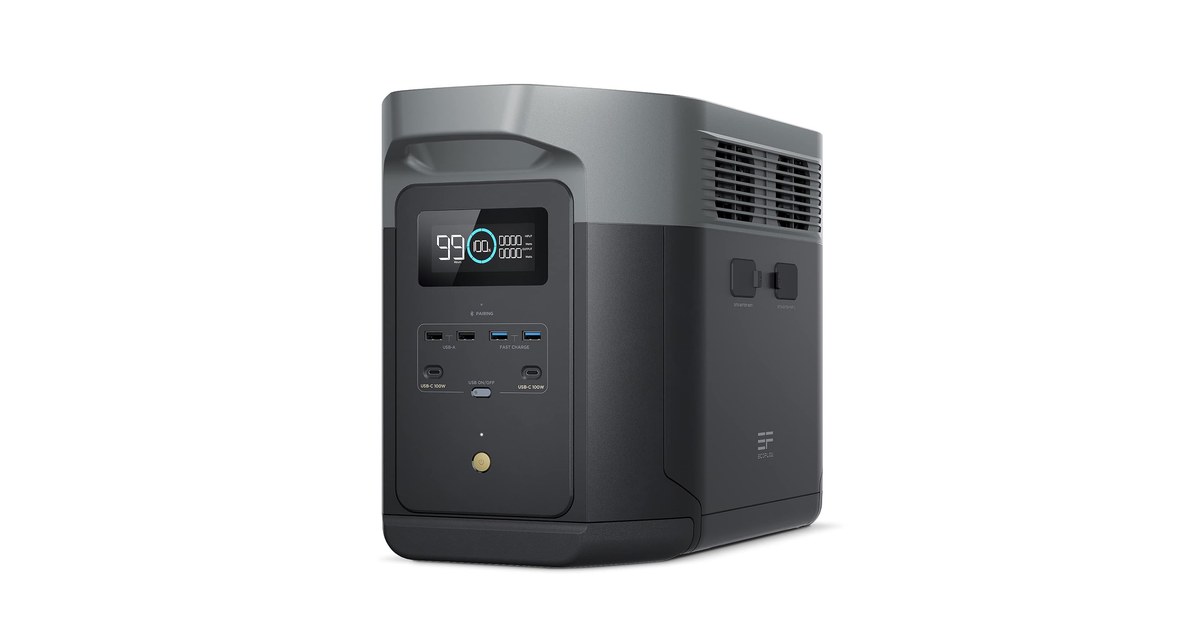
EcoFlow DELTA 2 Max (2,048Wh / 2,400W)
The home-backup battery benchmark — 2,400W output runs the fridge, furnace fan, and CPAP together, indoors, silently, and recharges in about an hour.
Check Price on Amazon →
Jackery Explorer 1000 v2 (1,070Wh / 1,500W)
A compact 1,070Wh power station with LiFePO4 chemistry, 1,500W output, and manufacturer-specified fast charging.
Check Price on Amazon →
Anker SOLIX C1000 (1,056Wh / 1,800W)
The value heavyweight — near-DELTA output at a mid-tier price, 58-minute full charge, from the brand that made charging boring-reliable.
Check Price on Amazon →
EcoFlow DELTA Pro + 400W Solar Panel (3,600Wh)
The whole-home battery flagship — 3.6kWh expandable, solar-fed, transfer-switch capable. Backup power with no fuel at all.
Check Price on Amazon →
Jackery Explorer 500 v2 (512Wh / 500W)
The entry door — fridge-for-a-few-hours, phones-for-a-week capacity at an impulse-adjacent price. The first battery most households buy.
Check Price on Amazon →Every gas generator post on this site carries the same warning: outside only, 20 feet from windows, carbon monoxide kills. Battery power stations avoid combustion and carbon monoxide during normal operation, though their electrical, temperature, charging, and ventilation instructions still matter — a big lithium pack with household outlets that runs the essentials next to your bed, in silence, with zero exhaust. Five years ago they were camping toys; the LiFePO4 chemistry generation made them legitimate backup hardware. Here's who they're for, what they honestly can and can't do, and which ones earn the money.
Watt-Hours: The Number That Actually Matters
Gas generators are rated in watts (how much at once); batteries add the crucial second number — watt-hours (how much total). A refrigerator draws ~150Wh per hour averaged, a CPAP ~40Wh, a furnace fan ~400Wh. So a 1,000Wh station runs a fridge alone about 6 hours; the 2,048Wh DELTA 2 Max runs the fridge-plus-CPAP-plus-phones stack through a night. That math is the whole purchase decision: size the battery to your outage length, not your peak load.
The Picks
EcoFlow DELTA 2 Max — The Home Backup Battery
2,048Wh of LiFePO4 capacity (3,000+ cycle lifespan — a decade of outages), 2,400W of output that starts refrigerators and runs microwaves, a manufacturer-stated full AC recharge time of about 80 minutes under specified conditions, and expansion ports for extra batteries when you want more nights. It's the unit that turned power stations from gadgets into infrastructure: park it by the panel, keep it topped up, and short outages simply stop mattering. Silent, so it also moonlights as the RV and job-site unit without making enemies.
Jackery Explorer 1000 v2 — America's Default Power Station
Jackery outsells everyone for the same reason Scotts outsells in spreaders: it just works, and owners say so in volume. The v2 brought LiFePO4 longevity and one-hour charging to the famous orange box: 1,070Wh runs a fridge overnight or many nights of CPAP use only at low draw; humidification, pressure, inverter losses, and the individual device can reduce that substantially, light enough to carry one-handed to the campsite between outages. The all-rounder answer.
Anker SOLIX C1000 — The Value Heavyweight
Anker's play is straightforward: DELTA-class output (1,800W, surge 2,400W) at the Jackery price point, with the fastest charging in the class (about 58 minutes) and ten-year design life. If the spreadsheet decides, the C1000 usually wins it. The ecosystem is younger than EcoFlow's — fewer expansion options — which is the tradeoff for the price.
EcoFlow DELTA Pro + Solar — Fuel-Free Whole Home
3,600Wh expandable past 10kWh, 3,600W output, transfer-switch integration, and the bundled 400W panel that refills it from the sky — this is the battery system that competes with standby generators for homes that want backup without any fuel logistics ever. It's serious money and serious capability; for off-grid cabins, solar-minded households, and medical-necessity backup, it's the class act.
Jackery Explorer 500 v2 — The Entry Door
Half a kilowatt-hour covers what most short outages actually threaten: phones, router, lights, the CPAP, the fridge in bursts. For the household not ready for four-figure backup, it's the honest starter — and the unit that teaches you what capacity you really need before you buy the big one.
The Class at a Glance
| Unit | Capacity / Output | Illustrative runtime* | Best For |
|---|---|---|---|
| DELTA 2 Max | 2,048Wh / 2,400W | ~11–13 hrs at a 150W average load* | Overnight home backup — top pick |
| Jackery 1000 v2 | 1,070Wh / 1,500W | ~6 hrs at a 150W average load* | The popular all-rounder |
| Anker C1000 | 1,056Wh / 1,800W | ~6 hrs at a 150W average load* | Best value per watt |
| DELTA Pro + solar | 3,600Wh+ / 3,600W | Varies widely with load and solar input* | Fuel-free whole home |
| Jackery 500 v2 | 512Wh / 500W | ~3 hrs at a 150W average load* | Entry, devices + CPAP |
*Simple capacity-based estimates before appliance cycling, inverter losses, temperature, battery reserve, and startup behavior. Measure your actual devices for planning.
Battery or Gas? (The Short Version)
Batteries win: apartments and townhomes, overnight silence, indoor use, CPAPs and electronics, short-and-frequent outages, zero-maintenance readiness. Gas wins: multi-day outages, whole-house loads, well pumps and HVAC, and cost-per-watt-hour by a mile. Most serious backup setups end up hybrid — battery for the first silent night, propane-fed generator for the long haul. The full head-to-head lives in our battery vs gas breakdown.
Common Questions
Can these really run indoors safely?
Yes — they produce no combustion exhaust or carbon monoxide during normal use. Follow the manual for charging, operating temperature, ventilation, placement, moisture, cable loading, and storage; do not block cooling vents or use damaged batteries.
What's LiFePO4 and why does it matter?
Lithium iron phosphate — the newer chemistry across every pick here. It survives 3,000+ charge cycles (vs ~500 for the old NMC packs), tolerates heat better, and makes a decade-long service life realistic. Don't buy the older chemistry at any discount.
Do the solar panels actually work?
Physics honestly: a nominal 200W panel may add roughly 0.6–1.0kWh on a favorable clear day after real-world losses — meaningful refill for the mid-size units, genuinely sustaining for the DELTA Pro's array. As outage insurance, panels can materially extend runtime when daily solar harvest exceeds the essential loads. As primary charging, wall outlets win every time the grid's up.
How long do they hold a charge sitting in a closet?
LiFePO4 self-discharge is slow — figure 80%+ after months. Top up quarterly and it's storm-ready year-round, which is precisely the maintenance schedule gas generators wish they had.
Bottom Line
The DELTA 2 Max for real overnight backup, the Jackery 1000 v2 or Anker C1000 for the versatile middle, the DELTA Pro when the mission is fuel-free whole-home, and the 500 v2 to start. Pair any of them with the gas cluster for the long outages, and the weather can do what it wants.
Ready to buy?
Browse current pricing, current models, and reader reviews on Amazon — your clicks keep these guides free.
Shop Battery Generators on Amazon →