Battery Backup vs. Gas Generator: Which Is Better?
One is silent and runs beside your bed; the other runs for days on fuel you can pour — the right answer depends on which outage you're buying for
Top Picks (At a Glance)
Quick links to the products we recommend most in this guide. Prices shown on Amazon at click-through.

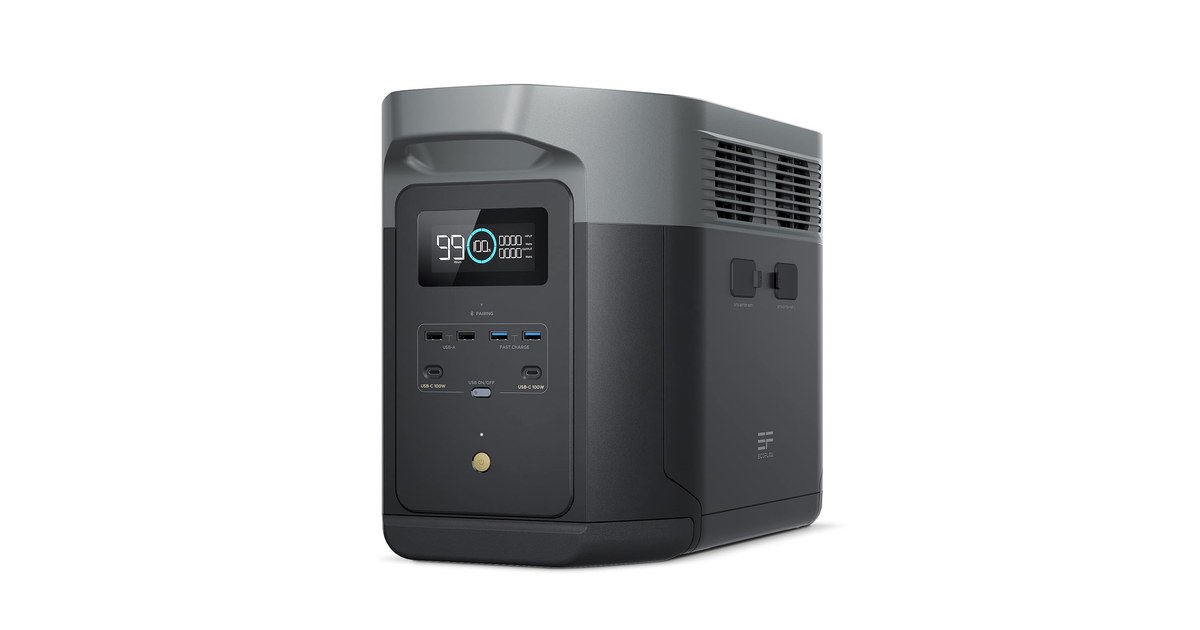
EcoFlow DELTA 2 Max (Battery Side)
The battery case in one box — silent, indoor-safe, 2,048Wh through the first night of any outage without waking a neighbor.
Check Price on Amazon →
Westinghouse 6500W Dual Fuel (Gas Side)
The gas case in one machine — days of whole-house essentials on fuel you can refill, for less than the battery costs.
Check Price on Amazon →
Jackery Explorer 1000 v2 (Battery Value)
The affordable battery answer for short outages — fridge overnight, CPAP for a week, camping the rest of the year.
Check Price on Amazon →
Westinghouse 12,500W Dual Fuel (Gas Flagship)
What batteries can't yet be — 9,500 running watts for days, transfer-switch ready, whole-home essentials through a week-long outage.
Check Price on Amazon →This is the comparison the backup-power industry fudges from both directions — battery brands imply they'll run your house for a week, generator brands pretend noise and carbon monoxide are details. We've now reviewed both sides in depth on this site: the battery generator lineup and the full gas cluster. This page is the two of them in one ring, with numbers.
Round 1: How Much Power, For How Long
Gas wins runtime, and it isn't close. A Westinghouse 12,500 makes 9,500 running watts for as long as you keep pouring fuel — days, a week, whatever the outage demands. The biggest practical battery (DELTA Pro class) stores 3.6kWh: at whole-house-essentials draw, that's hours, and refilling means sun or a working outlet. Batteries are a bucket; generators are a pipe. For the ice-storm week, you want the pipe.
Round 2: Where and When You Can Use It
Battery wins usability, and it isn't close either. Power stations can run suitable loads indoors without combustion exhaust, including overnight and in homes where a fuel-burning generator cannot be safely placed and zero neighbor complaints. Gas machines demand outdoor placement 20 feet from windows, a running cover in the rain that caused the outage, and a tolerance for lawnmower-volume noise all night. Entire categories of households — renters, townhomes, HOA-restricted — are battery-only by rule, not preference.
Round 3: The Money
| Battery (DELTA 2 Max class) | Gas (Westinghouse 6500 class) | |
|---|---|---|
| Upfront | ~2x the gas machine | Baseline |
| Stored energy | 2 kWh per unit | ~20–25 kWh usable electricity per 20-lb tank, model/load dependent |
| Cost per kWh delivered | Pennies (grid-charged) | Dollars (fuel) |
| Maintenance | Top up quarterly | Oil, test runs, fuel rotation |
| Lifespan | ~3,000 cycles (decade) | Decade+ with care |
Read that middle row twice: a 20-pound propane tank can deliver roughly ten or more times the usable electricity stored in a 2kWh battery, depending on generator efficiency and load. That's the physics gas is defending, and why batteries can't yet replace generators for long outages — only complement them.
Round 4: Readiness
Batteries win the 3 AM test: they're already charged, they start by pressing a button indoors in your pajamas, and they've needed nothing from you but a quarterly top-up. Gas machines reward discipline — monthly test runs, fresh oil, stored fuel — and punish neglect with a carburetor rebuild exactly when the grid dies. (Dual-fuel machines on propane largely dodge the fuel-decay half of that; see the propane guide.)
The Verdict Table
| Your Situation | Answer |
|---|---|
| Apartment, townhome, HOA limits | Battery — it's your only legal option, and it's a good one |
| Outages measured in hours, few times a year | Battery — silent, effortless, done |
| CPAP / medical devices overnight | Battery power station sized and placed according to the medical-device and battery manuals, gas as the reserve |
| Outages measured in days; well pump; big loads | Gas — the home generator guide sizes it |
| Whole-house on a budget | Gas + transfer switch |
| Serious, all-scenarios preparedness | Both: battery first night, gas long haul |
The Hybrid Play (What the Prepared Actually Do)
The strategy that's quietly become standard among people who've lived through real outages: a mid-size battery indoors handles the instant, silent first response — fridge bridged, phones charged, CPAP running, no 2 AM rain-soaked generator start. If the outage stretches, the gas machine takes over daytime duty outside, and — the elegant part — recharges the battery while it runs, so nights go silent again. Battery-plus-generator isn't buying twice; it's buying the day shift and the night shift.
Common Questions
Can a battery power station run a whole house?
The expandable flagships (DELTA Pro class) with transfer-switch integration can carry essentials for a day-ish and solar can stretch that — at a total cost well past a standby generator. For most budgets, "battery whole-house" is tomorrow's answer, not today's.
Is a solar panel enough to make a battery unlimited?
For essentials-only loads in sunny weather, panels genuinely sustain the mid-size units indefinitely. For furnace-fan-plus-fridge winter loads under storm clouds — the actual outage scenario — treat solar as range extension, not a power plant.
Which holds value longer?
LiFePO4 batteries fade gently over ~3,000 cycles; gas machines last as long as their maintenance. A decade is realistic for both — the difference is the battery gets there with correct storage and periodic checks, the generator gets there loved.
If I can only buy one right now?
Match the machine to your most-likely outage: hours → battery; days → gas. Then let the other one be next year's upgrade — that's the order most hybrid households arrived in anyway.
Bottom Line
Batteries and generators aren't competitors so much as shift workers: silence and safety versus stamina and scale. The DELTA 2 Max is the best first night of backup power money can buy; the Westinghouse dual fuels are the best week. Buy for the outage your region actually serves — and if the forecast keeps writing checks, buy the other one too.
Ready to buy?
Browse current pricing, current models, and reader reviews on Amazon — your clicks keep these guides free.
Shop Backup Power on Amazon →