Best Home Backup Generators for 2026
The right home generator isn't the biggest one — it's the one sized to the outage your house actually has
Top Picks (At a Glance)
Quick links to the products we recommend most in this guide. Prices shown on Amazon at click-through.

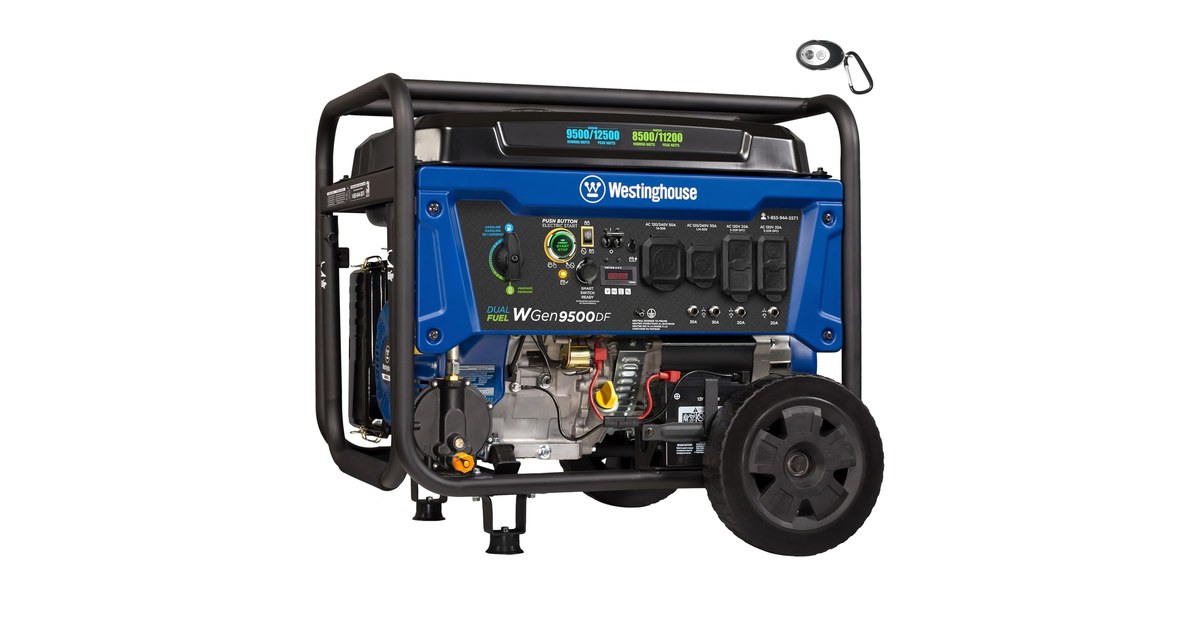
Westinghouse 12,500W Dual Fuel (WGen9500DF)
The best portable home-backup machine you can buy — broad selected-circuit backup on gas or propane after a load calculation, remote start.
Check Price on Amazon →
Westinghouse 6500W Dual Fuel
The essentials tier — furnace fan, fridge, freezer, sump, and lights for the price of a nice TV. Where most homes should start.
Check Price on Amazon →
DuroMax XP13000EH 13,000W Dual Fuel
Maximum portable wattage per dollar — the well-pump-and-central-air answer for rural homes where an outage takes the water with it.
Check Price on Amazon →
Champion 4000W Dual Fuel Inverter
The apartment-and-townhouse tier — clean, quiet power for the fridge and electronics when whole-house isn't the mission.
Check Price on Amazon →"Best generator for home" is really a sizing question wearing a shopping question's clothes. The house with gas heat and city water needs half the watts of the house with a well pump and a heat pump — and buying the wrong tier disappoints in both directions: undersized trips breakers mid-outage, oversized burns fuel to idle. This guide sorts the four machines worth owning by the household they actually fit.
Start With Your House's Outage Personality
City-services house (gas heat, city water): your outage is about food, lights, and the furnace fan — 5,000-6,500 running watts covers it comfortably. Well-pump house: the pump's starting surge (double-plus its running draw) sets your floor — you're a 9,500W+ household whether you like it or not. All-electric house: water heater and heat pump push you to the 10,500W+ tier or into choosing what stays off. Apartment/townhome: you're powering a fridge and sanity, not a panel — the quiet inverter tier is your whole answer — our inverter generator guide sorts that class.
The Picks, by Household
Westinghouse 6500W — Where Most Homes Should Start
The essentials tier, executed: 5,300 running watts handles furnace fan, refrigerator, freezer, sump pump, lights, and chargers together, with dual-fuel flexibility and a 30A transfer-switch outlet. For the gas-heat, city-water majority, more generator than this is fuel bill, not resilience. Full class comparison in the dual-fuel guide.
Westinghouse 12,500W — The Serious-Backup Standard
When the outage stakes include a well pump, home-office income, or a freezer full of beef, this is the machine: 9,500 running watts on gas, remote start from the kitchen window, 50A transfer-switch connection (a proper 10-gauge generator cord makes that hookup), and a deep owner-feedback record. The propane guide covers why its dual-fuel capability matters most exactly when supply chains don't work.
DuroMax 13,000W — Rural Muscle
Farm and rural properties stack loads city homes never see: well pump, pressure tank, stock tank heaters, shop circuits. The XP13000EH delivers the class's most watts per dollar with the build to run them for days. Loud, heavy, unbothered — the right personality for the job.
Champion 4000W Inverter — Small-Household Sanity
No panel access, no transfer switch, no whole-house ambitions — just a fridge, phones, a fan or space heater, and quiet enough not to advertise your generator to the block. Clean inverter power means the laptop and CPAP are safe. This is also the honest pick for anyone whose real generator use is camping with occasional outage duty.
Portable vs Standby: The Money Conversation
Everything above is portable — thousands, not tens of thousands, and it doubles for camping and job sites. A permanently installed standby system (automatic start, whole-house coverage via a 200A automatic switch) is the luxury solution at 5-10x the total cost, installed. The honest math: portables with a manual transfer switch deliver 90% of the standby experience for 15% of the money — the missing 10% is "it works while you're on vacation." Buy the standby when that sentence justifies the gap; buy the Westinghouse until then.
The Picks at a Glance
| Household | Machine | Running Watts | The Mission |
|---|---|---|---|
| Gas heat, city water | Westinghouse 6500W | 5,300 | Essentials, comfortably |
| Well pump / high stakes | Westinghouse 12,500W | 9,500 | Whole-home essentials |
| Rural / all-electric | DuroMax 13,000W | 10,500 | Everything, loudly |
| Townhome / small | Champion 4000W inverter | 3,500 | Quiet essentials |
Common Questions
What size generator runs a whole house?
"Whole house" with central air and electric heat means 15,000W+ standby territory. "Everything that matters" — heat, water, food, lights, devices — is the 9,500-10,500 running-watt tier above, which is why it's the sweet spot of home backup.
How do I calculate my actual needs?
Add running watts of everything you'd run simultaneously, then add the largest single starting surge (usually the well pump or AC — roughly 2-3x its running draw). Or let our generator wattage calculator do the arithmetic from typical appliance loads — then confirm against your own nameplate stickers, which are always the final word.
Dual fuel or gas-only for home backup?
Dual fuel, and it isn't close — propane stores indefinitely, which is the entire failure mode of the gas cans in your garage. The propane guide runs the full argument.
Where should it live between outages?
Dry, ventilated, with a monthly 10-minute test run — and a proper cover if it stages outdoors. Storage neglect, not runtime, is what kills home generators.
Bottom Line
Size to your house's outage, not to the spec sheet: 6500W for the city-services majority, 12,500W when water or income rides on the power, 13,000W DuroMax for rural loads, Champion inverter for small quarters. Then spend the saved difference on the transfer switch — because the best generator for your home is the one actually connected to it.
Keep It Running
The consumables owners of this gear buy again every season - the boring stuff that decides whether it starts.

STA-BIL Storage Fuel Stabilizer
A generator sits for months and has to start in a storm - stabilizer is not optional.
Check Price on Amazon →
Sea Foam Motor Treatment
Run a treated tank through it at each monthly test and the carb stays clean.
Check Price on Amazon →
Briggs & Stratton SAE 5W-30 Engine Oil
Small-engine oil for the change most owners skip - use the grade your generator manual specifies.
Check Price on Amazon →Ready to buy?
Browse current pricing, current models, and reader reviews on Amazon — your clicks keep these guides free.
Shop Home Generators on Amazon →