Best Fertilizer Spreaders for 2026
Fall is when lawns are actually built — and the spreader is the tool that decides whether your fertilizer feeds the grass or stripes it
Top Picks (At a Glance)
Quick links to the products we recommend most in this guide. Prices shown on Amazon at click-through.

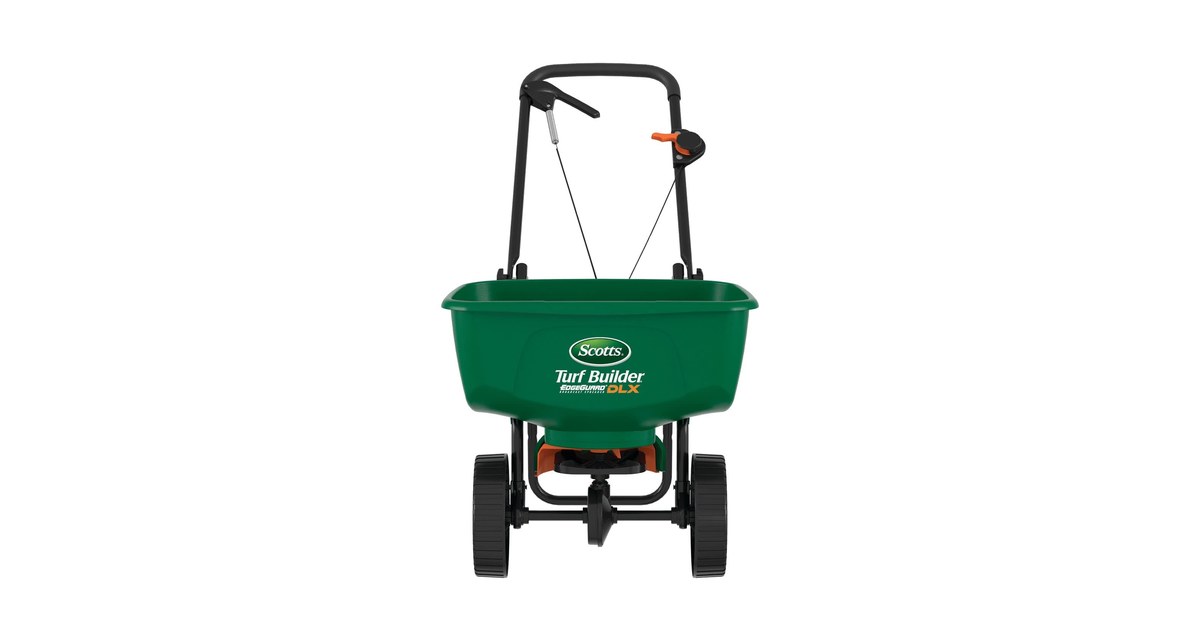
Scotts Turf Builder EdgeGuard DLX Broadcast
The default homeowner spreader — 15,000 sq ft hopper, EdgeGuard keeps product off sidewalks and out of beds, and every bag of Scotts product prints its setting right on the label.
Check Price on Amazon →
EarthWay 2150 Commercial Walk-Behind (50 lb)
The buy-once upgrade — pneumatic tires, steel frame, and a 50-pound hopper that laughs at big lawns. What lawn-care pros push when it's their money.
Check Price on Amazon →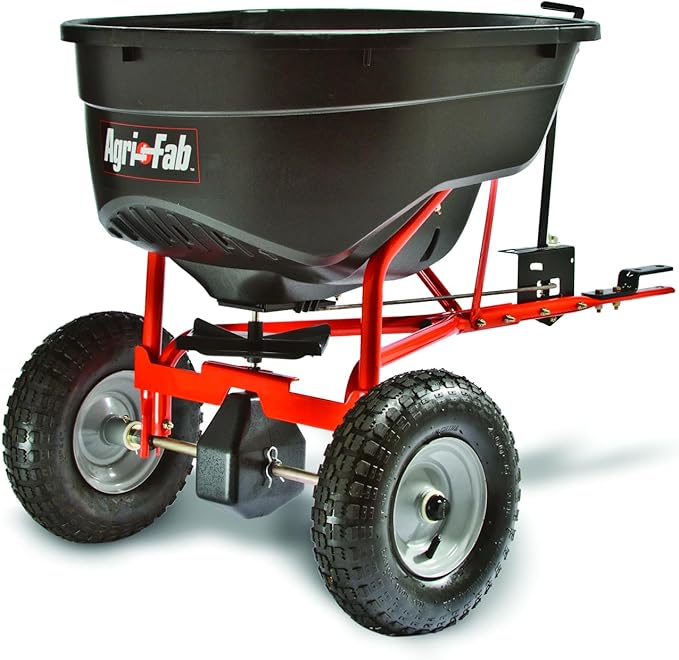
Agri-Fab 130 lb Tow-Behind Broadcast
The acreage answer — hitch it to the garden tractor or zero-turn and fertilize an acre in the time a walk-behind does the front yard.
Check Price on Amazon →
Scotts Whirl Hand-Powered Spreader
The small-yard and spot-work tool — covers up to 1,500 sq ft per fill, stores on a hook, costs less than a bag of good seed. A popular compact option.
Check Price on Amazon →Here's the thing the fertilizer aisle doesn't tell you: fall is the season that builds lawns. The September and late-October feedings do more for root development and spring green-up than everything you do in summer combined — and overseeding season runs right alongside. All of it goes through a spreader, and a bad one turns expensive product into zebra stripes and burned patches. This is the cheapest tool in the lawn game with the most expensive consequences.
Broadcast vs Drop: The 20-Second Decision
Broadcast (rotary) spreaders fling product in a 4-8 foot arc — fast coverage, forgiving overlap, the right choice for almost everyone. Every pick on this page is a broadcast. Drop spreaders release product straight down in an exact width: precise along beds, brutal to use well (miss by two inches and you get an unfed stripe that shows for a month). Unless your lawn is a formal postage stamp surrounded by beds, broadcast wins — and EdgeGuard-style shields deliver most of drop's precision anyway.
The Picks
Scotts EdgeGuard DLX — The Default, for Good Reason
Holds enough for 15,000 square feet, rolls on real wheels, and the EdgeGuard shield blocks the right side of the arc so you can run sidewalks and bed lines without feeding the concrete. The killer feature is boring: every bag of Scotts seed and fertilizer prints its DLX setting on the label. No calibration math, no test passes — set the dial to the bag number and walk. For the homeowner who feeds twice a fall and overseeds once, that convenience is worth more than any build-quality delta.
EarthWay 2150 — What the Pros Push
The 2150 is the spreader lawn-care companies buy with their own money: 50-pound hopper, welded steel frame, pneumatic tires that roll over ruts without changing spread rate, and a three-hole drop system that patterns more evenly than any consumer machine. It costs three times the Scotts and lasts roughly forever — this is the Woodhaven rack logic applied to lawn care. Buy it if you're past half an acre, feed four-plus times a year, or just hate replacing tools.
Agri-Fab 130 lb Tow-Behind — The Acreage Machine
Past an acre, walking stops being noble and starts being dumb. The Agri-Fab hitches to any garden tractor or zero-turn, carries 130 pounds, and covers about 25,000 square feet per fill at mowing speed. Assembly is the usual Agri-Fab hour of bolts, and the plastic gearbox wants a shot of grease each season — do that and it's a decade machine.
Scotts Whirl — The Small-Yard Honest Answer
Under 2,000 square feet of actual grass? A walk-behind is overkill. The Whirl is a hand-crank spreader that covers 1,500 square feet per fill, weighs nothing, and is a longtime owner favorite. It's also the right second spreader for everyone else: spot-seeding repairs, feeding the tricky side strip, and winter ice-melt duty on the walk.
The Picks at a Glance
| Spreader | Capacity | Lawn Size | Best For |
|---|---|---|---|
| Scotts EdgeGuard DLX | ~15,000 sq ft | Up to 1/2 acre | The default — settings on every bag |
| EarthWay 2150 | 50 lb | 1/4 acre – 1+ acre | Buy-once, pro-grade patterning |
| Agri-Fab tow-behind | 130 lb | 1+ acres | Tractor and zero-turn owners |
| Scotts Whirl | 1,500 sq ft/fill | Small yards | Spot work, ice melt, tiny lawns |
The Fall Feeding Calendar (Why You're Buying This Now)
Early September: the main fall feeding plus overseeding — soil is warm, nights are cooling, weeds are dying back. This is the application that thickens turf. Late October/early November: the winterizer feeding that banks nitrogen for spring root growth — the single highest-return application of the year in the transition and northern zones. Both go through the spreader you buy this month; local extension guidance should determine your exact application dates. Pair it with the landscape rake if you're leveling before seed.
Using It Without Stripes: Three Rules
Half rate, two directions. Set the spreader to half the bag rate and make two perpendicular passes — crosshatching hides every overlap sin and halves the burn risk from over-application.
Walk like you mean it. Broadcast rates assume a steady 3 mph walk. Slow down and you double-dose; speed up and you starve it. Pick a pace, keep it.
Sweep the hard surfaces. Granules on the driveway wash into storm drains and stain concrete. Thirty seconds with a blower puts product back on the lawn where it belongs.
Common Questions
Can I use the same spreader for seed and fertilizer?
Yes — every broadcast spreader here handles seed, granular fertilizer, and ice melt. You'll just change settings (seed typically runs a smaller opening than fertilizer; the bag tells you).
What setting do I use for a non-Scotts product in a Scotts spreader?
Check the product's bag first — most brands publish cross-reference settings for common spreaders. No listing? Start at one-third open, spread a measured test area, and weigh what's left. Ten minutes once beats a striped lawn all fall.
Do I really need to clean it after each use?
Yes — fertilizer is salt, and salt eats steel and seizes adjusters. Hose it out, let it dry open, hit the moving parts with a shot of silicone spray before winter. The spreaders that die young die of neglect, not use.
Is a tow-behind worth it under an acre?
No — the turning radius fights you in a normal yard and the walk-behinds pattern better at small scale. Tow-behinds earn their hitch past an acre of open ground.
Bottom Line
The EdgeGuard DLX for most lawns, the EarthWay 2150 when you're done buying twice, the Agri-Fab when the tractor does the walking, and the Whirl when the yard is small or the job is spot work. Whichever fits, have it calibrated before your local fall-feeding window — fall feeding is the highest-leverage thing a lawn owner does all year, and it can't happen through a spreader that's still in a delivery truck.
Ready to buy?
Browse current pricing, current models, and reader reviews on Amazon — your clicks keep these guides free.
Shop Fertilizer Spreaders on Amazon →