Best Propane Generators for Home Backup in 2026
Gasoline goes stale in months — the propane in your grill tank is still perfect a decade from now, and that's the whole argument
Top Picks (At a Glance)
Quick links to the products we recommend most in this guide. Prices shown on Amazon at click-through.

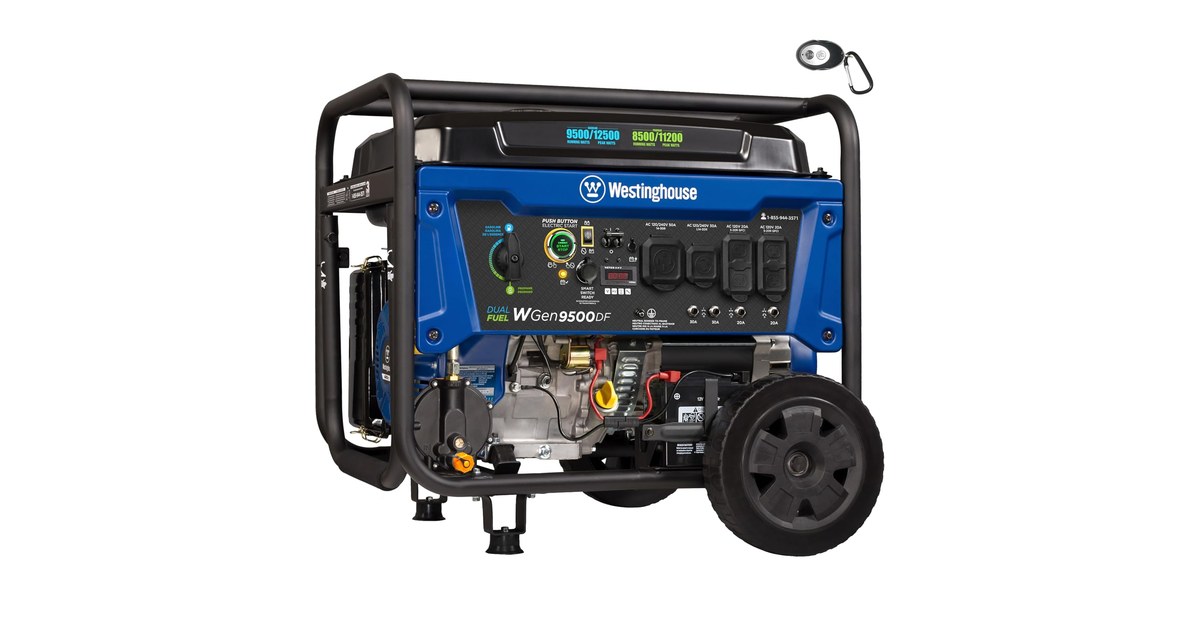
Westinghouse 12,500W Dual Fuel Home Backup (WGen9500DF)
The home-backup pick — 12,500 peak watts on gasoline, dual-fuel flexibility, remote start, and a transfer-switch-ready 50A outlet.
Check Price on Amazon →
Westinghouse 4650W Dual Fuel Portable
The value door into propane power — fridge, freezer, lights, and phones through an outage, RV-ready, at a price that makes preparedness painless.
Check Price on Amazon →
Champion 4000W Dual Fuel Inverter (Quiet Technology)
The quiet one — inverter-clean power for electronics and CPAPs, at conversation volume, on propane. The overnight-outage and RV favorite.
Check Price on Amazon →
DuroMax XP13000EH 13,000W Dual Fuel
The whole-house heavyweight — 13,000 peak watts can support demanding selected circuits when starting and running loads are calculated. Propane-capable muscle for serious outages.
Check Price on Amazon →Here's the scenario every generator owner eventually lives: the storm's coming, the gas cans in the garage are eight months old, and every station in town has a line around the block. Gasoline can degrade during storage, especially without stabilization and proper container management. Propane is the fuel that doesn't care. The 20-pound tank behind your grill is as good today as the day it was filled, and it'll still be good when your grandkids inherit it. That's the entire case for propane-capable generators, and it's why every machine on this page burns it.
Why Dual Fuel Won the Propane Argument
Pure propane-only generators exist, but the market voted for dual fuel — machines that burn gasoline or propane with the turn of a selector — and the market's right. You get propane's shelf-stable readiness for emergencies plus gasoline's higher output and easier mid-outage resupply if the outage outlasts your tanks. Expect roughly 10% less peak power on propane than gas from the same machine; every rating below tells you both numbers, and we size accordingly.
The Picks
Westinghouse 12,500W — The Home Backup Standard
This is the machine that made whole-home-essentials backup a normal purchase: 12,500 peak watts on gasoline (about 11,200 on propane), a remote-start fob that works from the kitchen, a transfer-switch-ready 50A outlet, and a deep owner-feedback record. On propane it can support a substantial set of selected household circuits when the combined running and starting loads have been calculated — the whole don't-lose-the-food, don't-freeze-the-pipes mission. Pair it with a transfer switch and an electrician visit, and outages become a five-minute inconvenience.
Westinghouse 4650W — Preparedness at a Painless Price
Not every outage plan needs five figures of watts. The 4650 covers the survival short list — refrigerator, freezer, phone charging, a window unit or space heater, lights — on a 20-pound grill tank, for the price of a decent lawn mower. It's also RV-ready, which makes it the double-duty pick for tailgates and campsites between storms. If a generator has been on your someday list, this is the someday-killer.
Champion 4000W Inverter — The Quiet Professional
Standard generators produce power too dirty for sensitive electronics and too loud for sleeping neighbors. Inverter machines fix both, and Champion's 4000W dual-fuel inverter is the class act: clean sine-wave output safe for laptops and CPAPs, quiet-technology muffling that holds conversation volume, and propane capability the inverter category mostly lacks. The overnight-outage machine — and the one RV owners buy twice after selling the first one by mistake.
DuroMax XP13000EH — The Everything Machine
Thirteen thousand peak watts can support demanding loads, but motor-starting requirements and simultaneous use must be calculated before connecting HVAC, pumps, or shop equipment. The DuroMax is the value heavyweight: more raw propane-fed power per dollar than anything in the class, electric start, and the build quality of a company that only makes engines and generators. It's heavy, it's loud under full load, and it does not care — this is the machine for rural properties where an outage means the water stops too.
The Picks at a Glance
| Generator | Peak / Running (gas) | Runtime on 20 lb propane | Best For |
|---|---|---|---|
| Westinghouse 12,500W | 12,500 / 9,500 | ~7 hrs @ half load | Whole-home essentials backup |
| Westinghouse 4650W | 4,650 / 3,600 | ~11 hrs @ half load | Budget outage kit, RV |
| Champion 4000W inverter | 4,000 / 3,500 | ~14 hrs @ quarter load | Electronics, quiet, camping |
| DuroMax 13,000W | 13,000 / 10,500 | ~6.5 hrs @ half load | Well pump + HVAC properties |
Sizing Without the Spreadsheet
~4,000W: fridge + freezer + lights + chargers + one heat/cool device. The keep-the-food tier. ~6,500W: add the furnace fan, sump pump, and a second appliance — the comfortable-outage tier (see the dual-fuel guide for the mid-size rankings). 9,500W+: well pumps, water heaters, central air, transfer-switch whole-home-essentials — the life-goes-on tier. Undersizing disappoints exactly once, during the outage; when between sizes, go up.
Common Questions
How long does propane last in storage?
Effectively forever — propane doesn't degrade. The tank's requalification date (12 years for 20-pounders) is the only clock. This is the whole reason propane-capable machines dominate emergency prep.
Does a generator lose power on propane?
About 10% versus gasoline — propane carries fewer BTU per unit. The ratings above account for it; size against propane output if propane is your emergency plan.
Can I run one on my grill tank?
Yes — many portable models include a regulator and hose for common 20-pound cylinders; use only the connection specified in the manual. Keep a full spare; swapping tanks takes thirty seconds. Bigger tanks (40 lb, 100 lb) run proportionally longer and never need the mid-outage swap.
Never, ever indoors — right?
Right. Carbon monoxide from generators kills people every storm season. Outside only, 20+ feet from windows and doors, exhaust pointed away, ideally with a CO alarm in the house. Propane burns cleaner than gas but the rule is identical.
What maintenance does a propane generator need?
Less than gas — propane doesn't gum carburetors, which eliminates the #1 generator failure. Monthly 10-minute test runs, oil changes per the manual, and it starts when the grid quits. That test run habit is the difference between owning a generator and owning a heavy paperweight.
Bottom Line
The Westinghouse 12,500W for the house, the 4650W for the budget, the Champion inverter for quiet and electronics, the DuroMax for properties where water comes from a well. Hurricane season is running and winter storm season is next — the best time to buy a generator is any week the weather isn't already on the radar, because when it is, everyone else is buying one too.
Keep It Running
The consumables owners of this gear buy again every season - the boring stuff that decides whether it starts.

STA-BIL Storage Fuel Stabilizer
A generator sits for months and has to start in a storm - stabilizer is not optional.
Check Price on Amazon →
Sea Foam Motor Treatment
Run a treated tank through it at each monthly test and the carb stays clean.
Check Price on Amazon →
Briggs & Stratton SAE 5W-30 Engine Oil
Small-engine oil for the change most owners skip - use the grade your generator manual specifies.
Check Price on Amazon →Ready to buy?
Browse current pricing, current models, and reader reviews on Amazon — your clicks keep these guides free.
Shop Propane Generators on Amazon →