Single-Stage vs Two-Stage Snow Blowers: Which One Your Driveway Actually Needs
One number - inches per storm - answers this better than any spec sheet
Top Picks (At a Glance)
Quick links to the products we recommend most in this guide. Prices shown on Amazon at click-through.

EGO Power+ SNT2122 21-Inch Single-Stage Snow Blower
The best single-stage machine, period - dual-battery throwing power and push-button cold starts.
Check Price on Amazon →
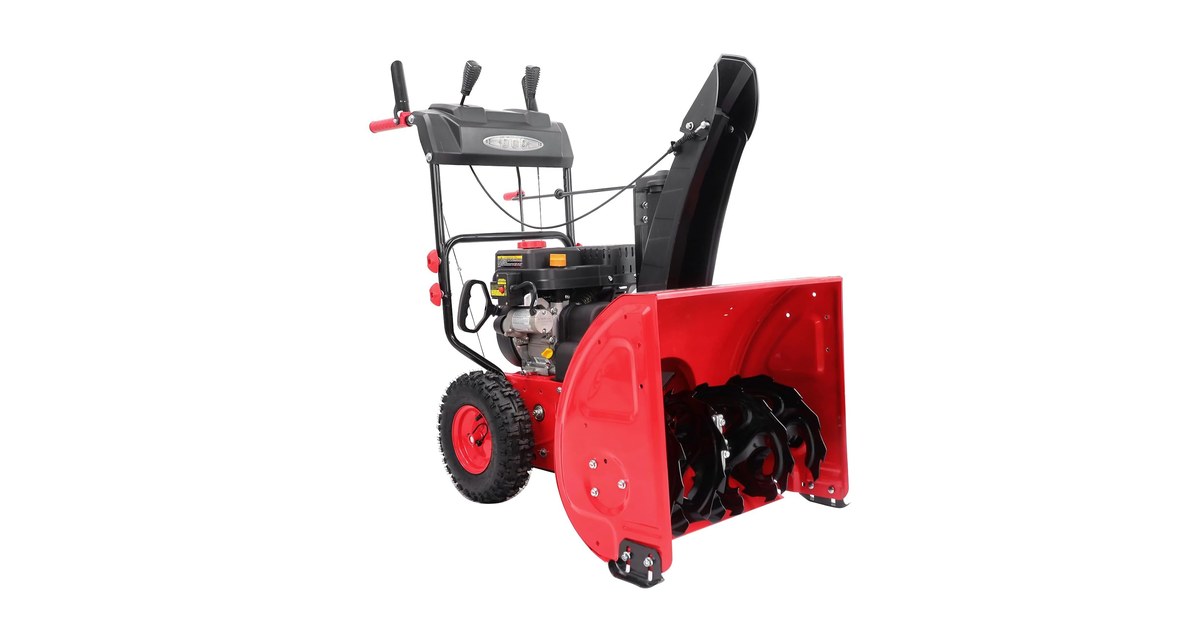
PowerSmart 24-Inch 212cc Two-Stage Gas Snow Blower
Self-propelled two-stage capability at a single-stage-adjacent price - the value door into real depth handling.
Check Price on Amazon →This is the one spec that actually matters when buying a snow blower, and it's also the one most buyers pick wrong - usually by over-buying two-stage muscle for a suburban pad, or under-buying a single-stage for lake-effect country. Here's how the two designs work and the three tests that pick between them.
How Each Design Works
Single-stage: one high-speed rubber-edged auger does everything - scoops the snow and flings it out the chute in the same motion. Because the auger spins fast and touches the pavement, it scrapes concrete beautifully clean and even pulls the machine forward slightly. The cost of that design: it can only swallow what fits in the auger housing at speed, so depth and dense slush choke it, and the surface contact makes it a stone-thrower on gravel.
Two-stage: a slow, toothed steel auger breaks up and feeds the snow (stage one), then a separate high-speed impeller fires it out the chute (stage two). The auger doesn't touch the ground - skid shoes hold it at adjustable height - and driven wheels push the machine. That's why two-stage machines eat depth, chew through the compacted ridge the plow leaves, work on gravel with the shoes raised, and throw farther.
The Three Tests
1. The Inches Test
Think about your typical storm, not your worst one. Mostly 2-8 inch events: single-stage clears them faster and easier than a two-stage, which is clumsy overkill in shallow snow. Regularly over 8 inches - or wet coastal dumps - and single-stage becomes shove-and-stall. Two-stage.
2. The Surface Test
This one is binary. Pavement: either works. Gravel, dirt, or pavers with proud edges: two-stage only, skid shoes up. A single-stage auger on gravel is a rock launcher aimed at your siding, your car, and your neighbor.
3. The Ridge Test
If a municipal plow seals your driveway with a knee-high compacted berm, that berm is the hardest material in residential snow removal - and it defeats single-stage machines almost regardless of their spec sheet. Regular plow ridges are, on their own, a sufficient reason to buy two-stage.
The Sizing Table
| Scenario | Stage | Width | Power |
|---|---|---|---|
| 1-2 car paved pad, under 8-inch storms | Single | 21-22 in | Battery or corded - see electric picks |
| 2-3 car paved, 8-14 inch storms or plow ridge | Two | 24 in | Gas, ~212cc |
| Long runs, gravel, drifts, lake-effect | Two | 26 in and up | Gas, 208cc+ name-brand engine |
What About Three-Stage and Track Drive?
Three-stage machines add an accelerator between auger and impeller - real, but a marginal gain sold as a revolution, and mostly found at dealer-brand prices. Track drive replaces wheels for steep or icy driveways; if your driveway is steep enough to need tracks you already know it. For everyone else, the single/two decision is the whole game.
Our Picks on Each Side
The full rankings live in the best snow blowers guide, but the two machines that define their classes: the EGO SNT2122 for single-stage (dual-battery throwing power, push-button starts at any temperature, no carburetor to gum up) and the PowerSmart 24-Inch for two-stage (self-propelled, electric start, honest steel construction at the friendliest tier in two-stage). If you land on gas, put stabilizer in the first tank - a spring of stale fuel is how most snow blowers die.
Common Questions
Is a two-stage snow blower worth it for a small driveway?
Usually not. On a small paved pad a two-stage is slower to maneuver, harder to store, and clears shallow snow worse than a single-stage. Buy the ridge and the inches, not the insurance.
Can a single-stage snow blower handle 12 inches of snow?
Once, slowly, in dry powder, taking half-width bites. As a routine matter, no - and in wet snow it will clog and stall. If 12 inches is normal weather where you live, that's a two-stage climate.
Why do single-stage blowers clear pavement cleaner?
The rubber-edged auger physically scrapes the surface, where a two-stage auger rides above it on skid shoes. It's the one job single-stage does better - which is why sidewalk crews often run both.
Keep It Running
The consumables owners of this gear buy again every season - the boring stuff that decides whether it starts.

STA-BIL Storage Fuel Stabilizer
Nine months of sitting is how snow blower carburetors die - treat every can.
Check Price on Amazon →
Briggs & Stratton SAE 5W-30 Engine Oil
A cold-weather grade for winter engines - confirm against your manual before you pour.
Check Price on Amazon →
Sea Foam Motor Treatment
The fix for a machine that ran fine in March and will not idle in December.
Check Price on Amazon →Ready to buy?
Browse current pricing, current models, and reader reviews on Amazon — your clicks keep these guides free.
Shop Snow Blowers on Amazon →