Generator Wattage Calculator: What Size Generator Do You Need?
Check the boxes for what your outage actually needs to run — the math, the surge, and the headroom are handled for you
Top Picks (At a Glance)
Quick links to the products we recommend most in this guide. Prices shown on Amazon at click-through.

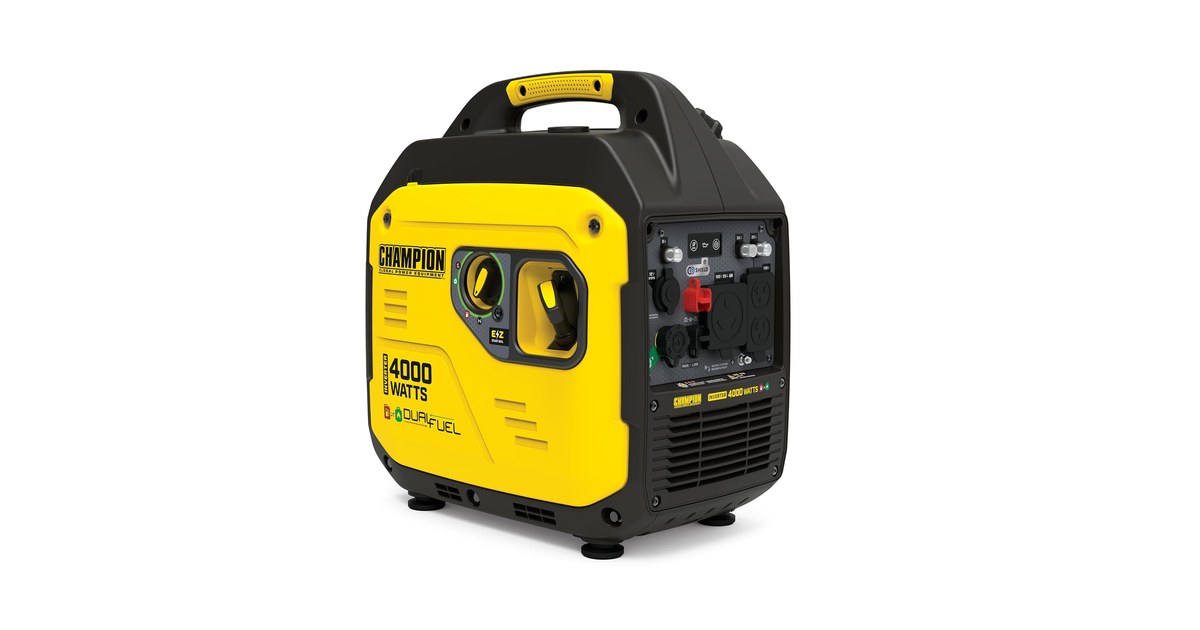
Champion 4000W Dual Fuel Inverter
The small-household tier — quiet, inverter-clean power for loads under ~3,500 running watts.
Check Price on Amazon →
Westinghouse 6500W Dual Fuel
The essentials tier — the answer for most gas-heat, city-water calculator results.
Check Price on Amazon →
Westinghouse 12,500W Dual Fuel (WGen9500DF)
The well-pump tier — 9,500 running watts covers the surge-heavy households this calculator flags.
Check Price on Amazon →
DuroMax XP13000EH 13,000W Dual Fuel
The top-of-the-math tier — rural, all-electric, and every-box-checked results land here.
Check Price on Amazon →Every generator return-and-regret story starts the same way: someone guessed at wattage. Guess low and the breaker trips the moment the well pump kicks on mid-outage; guess high and you bought hundreds of dollars of engine that idles loudly, drinking fuel. The right size isn't a product question — it's an arithmetic question about your house. So here's the arithmetic, done for you.
The Calculator
Check everything you'd want running at the same time during an outage. Be honest — the furnace fan and the fridge don't take turns.
Your number: 0 watts
Check some boxes above to get a sizing recommendation.
*Recommended capacity adds ~15% headroom over your peak demand — generators run happiest and longest below their limits. Wattages are typical figures; your appliance nameplates are the final word.
How the Math Works
Three numbers decide your generator size. Running watts — the sum of everything operating at once. Starting surge — motors (pumps, compressors, fans) briefly draw 2-3x their running watts at startup; you only add the single largest surge, because startups rarely stack. Headroom — around 15%, because a generator loafing at 70% load runs quieter, cooler, and years longer than one screaming at its ceiling.
That's why "what size generator do I need" has no universal answer: the gas-heat city-water house totals ~2,500 running watts, while the same family in a well-pump house needs nearly double — the pump's 3,000W starting surge sets the floor all by itself.
Typical Wattage Reference
| Appliance | Running | Starting |
|---|---|---|
| Refrigerator | 700W | 2,200W |
| Furnace blower fan | 800W | 2,350W |
| Well pump (1 HP) | 1,000W | 3,000W |
| Sump pump (1/2 HP) | 800W | 2,000W |
| Window AC (10k BTU) | 1,200W | 3,600W |
| Space heater | 1,500W | 1,500W |
| Lights + electronics | ~500W | ~500W |
Nameplate stickers on your actual appliances beat every table on the internet — including this one. Check the sticker, then round up.
What To Do With Your Number
Landed in a tier? The home backup guide matches each tier to the machine we'd buy, the dual-fuel guide explains why two fuels beat one in an emergency, and the propane guide covers the fuel that never goes stale. Whatever the size, budget for the transfer switch — it's what turns your wattage number into a powered house instead of a driveway full of extension cords. And if your total came in under ~2,000 watts, read the battery vs. gas comparison before buying an engine you may not need.
Common Questions
Why can't I just add up all the starting watts?
Because motors don't all start at the same instant. Standard sizing practice counts every running load plus the single largest starting surge. If two big motors genuinely could start together (well pump + sump pump in a storm), size for the larger surge plus the other motor's running draw — or stagger what's on the panel.
Is it bad to buy a bigger generator than I need?
It's not dangerous, it's just waste — more fuel per hour, more noise, more weight, more money. Generators are also least efficient at very light loads. Buy the tier your number says, not the one the spec sheet flexes.
What about sensitive electronics?
Laptops, TVs, and CPAPs prefer the clean power of an inverter generator or a battery power station. Conventional open-frame generators run them fine in most cases, but if electronics are most of your list, the inverter tier is the right answer anyway — your load is small.
Does this calculator work for RVs and job sites?
Same math, same physics. RV air conditioners are the classic surprise — a 13,500 BTU rooftop unit needs ~2,800W to start, which is exactly why the 3,000-4,000W inverter class dominates RV parks.
Bottom Line
Size to arithmetic, not anxiety: check your real loads, respect the biggest surge, add headroom, and buy the tier your number points at. The machine matters less than the match — a correctly sized mid-tier generator beats an oversized flagship every outage of its life.
Ready to buy?
Browse current pricing, current models, and reader reviews on Amazon — your clicks keep these guides free.
Shop Home Generators on Amazon →